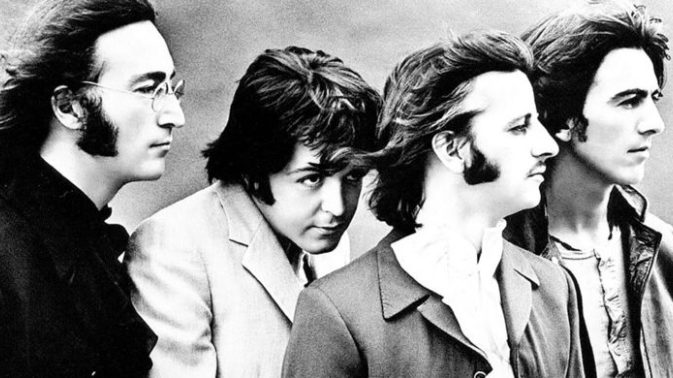
ON THIS DAY IN 1968, THE BEATLES RELEASED ONE OF THEIR MOST RENOWNED ALBUMS AS A BAND, THE WHITE ALBUM

Also known as The Beatles, the bands ninth studio album features a blank white cover, embellished only with the groups name, in a conscious attempt to contrast with the vivid artwork of their last album, Sgt. Pepper’s Lonely Hearts Club.

The writing and recording of this double album were considered unusual for the band. The majority of the songs were written During a transcendental Meditation course in Rishikesh, India. This included long periods of meditation, which both Lennon and McCartney relishing in a newly clear-headed approach to songwriting. That said, the band were frequently at odds with one another. The recording took place on a new 8-track system, and was edited so the songs segued together, rather than the usual 3 second gap between tracks.

On release, The White Album had a mixed reaction, with some critics panning it, and others calling it a major success. To this day it is still a remarkably mixed bag of opinions for the band. Some hold it as their favourite Beatles album, while many others complain about it’s length, it’s eccentricity and self-indulgence. Regardless, The Beatles is the groups most certified album, at 19 times platinum.
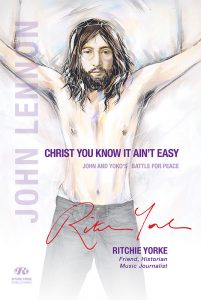
CHRIST YOU KNOW IT AIN’T EASY
JOHN AND YOKO’S BATTLE FOR PEACE

Printed & Ebook Available here

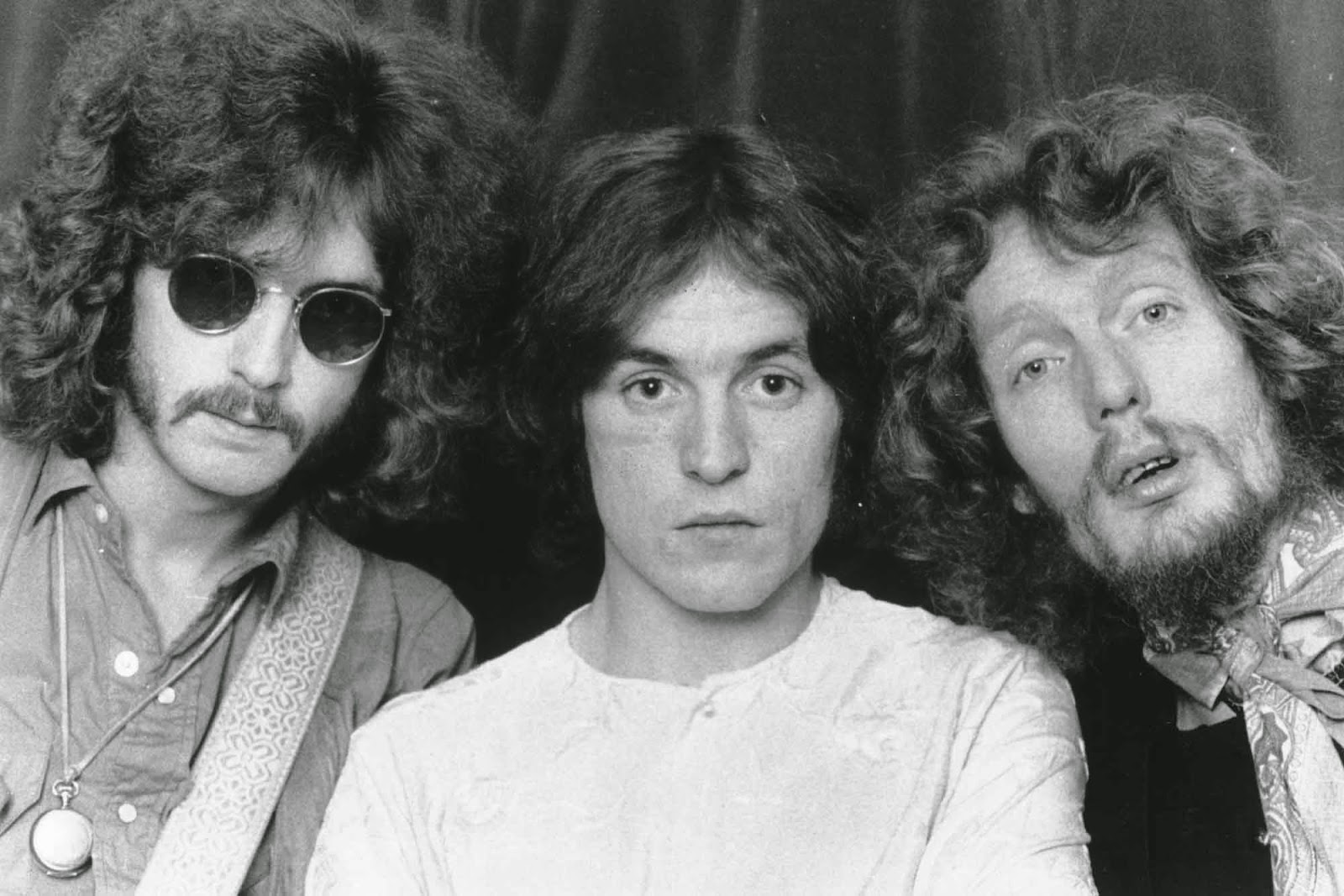
ON THIS DAY IN 1968, CREAM PERFORMED A MASSIVE SHOW AT MADISON SQUARE GARDEN, NEW YORK, AS PART OF THEIR FAREWELL TOUR

The group, made up of musical powerhouses Eric Clapton, Jack Bruce and Ginger Baker had enjoyed a hugely successful run, with their third album, Wheels of Fire, becoming the world’s first platinum-selling double album. They become widely regarded as one of the first successful supergroups.

Unfortunately, in 1968, the band suffered some problems leading to it’s eventual dissolution in November. Bruce and Baker created tension in the band with their ongoing rivalry and disagreements, while Clapton felt that communication between the members was unsatisfactory. New developments in sound equipment also caused troubles, with improved speakers and louder volume causing hearing difficulties for Baker. Clapton also claimed the new technologies led to their last shows being competitive and consisting of members showing off.

Cream was persuaded to record one final studio album, Goodbye, which was released in early 1969, after the group had officially disbanded. The band had actually decided to split in May of 1968, and an announcement was made about their final US tour and two concerts in London. The farewell tour was enormously successful and at the Madison Square Garden show, the band was presented with a platinum disc for the million sales of Wheels of Fire. After this tour, the group proceeded to pursue solo endeavours and other bands with varying success, as well as performing a couple of reunion concerts and greatest hits albums.

LED ZEPPELIN
LED to GOLD

Printed & Ebook Available here

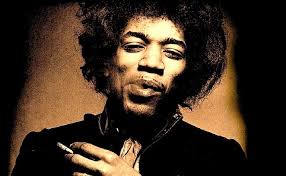
ON THIS DAY IN 1968, JIMI HENDRIX RELEASED HIS VERSION OF “ALL ALONG THE WATCHTOWER”

Originally penned by Bob Dylan, the song is renowned for it’s bizarre lyrics and whirling guitars. Dylan wrote the song while recuperating from a motorcycle accident and settling into family life and recorded it in 1967 at the same studio he had recorded “Blonde on Blonde” at, with the same producer. An early tape of these recordings was given to Hendrix in late 1967 and on January 21st, suitably impressed, he set about recording his own version in London.

Apparently, Hendrix’s recording of the song was less than straightforward, as his engineer recounts the guitarists large number of takes that day, and his shouted orders to the rest of the band. This led to bass player Noel Redding walking out on the session and having to be replaced, before Hendrix took over to complete the final bass section. Rolling Stones legend Brian Jones was also present at the session, taking control of the various percussion instruments, including new technology like the ‘vibraslap’. After the initial mixing, Hendrix became further dissatisfied with the result and went on to re-record and overdub sections of the song throughout the following three months.

The song was finally completed and released on September 21st, a month prior to the album version on Electric Ladyland, and quickly became Hendrix’s most successful US single, charting at number 20 and being named as one of the best cover versions of all time. Bob Dylan himself described his reaction to Hendrix’s version as overwhelming, due to the immense talent and dedicated development of the song. Dylan went on to say that “I liked Jimi Hendrix’s record of this and ever since he died I’ve been doing it that way… Strange how when I sing it, I always feel it’s a tribute to him in some kind of way”.

LED ZEPPELIN
LED to GOLD

Printed & Ebook Available here

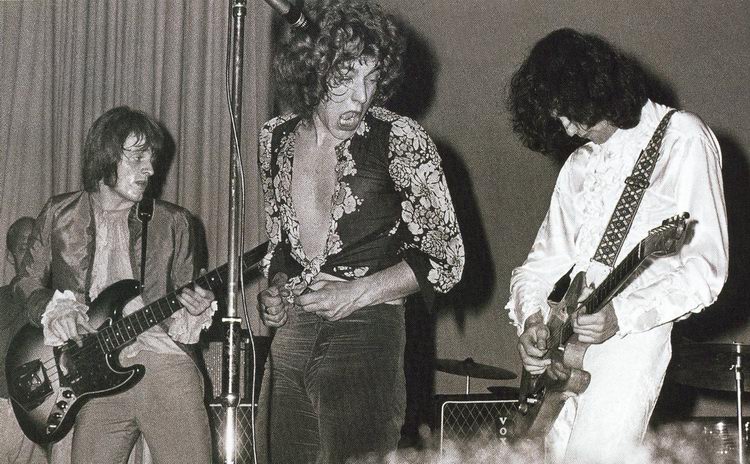
ON THIS DAY IN 1968, THE GROUP THAT WOULD COME TO BE KNOWN AS LED ZEPPELIN WOULD PERFORM THEIR DEBUT LIVE SHOW IN DENMARK

Billed as “The New Yardbirds” and promoted as a natural succession from the original Yardbirds. This promotion was kept quiet and many attendees believed they were going to a Yardbirds show, before arriving before Jimmy Page and three unrecognisable musicians. In reality, The Yardbirds had fallen apart due to internal difficulties and Page continued the shows in order to fill their contractual obligations.

No set list remains from the show but it is reported that many early Zeppelin classics were played, such as Dazed and Confused and You Shook Me, as well as a number of Yardbird classics. The shows ended up reviewing incredibly well by both critics and audience members, and the group decided to continue touring, albeit with their new name of Led Zeppelin.

The landmark show both boosted the groups confidence to launch something new, and introduced the world to the ferocious music that was soon to come, as well as to the incredible musicians who would be creating these sounds.

LED ZEPPELIN
LED to GOLD

Printed & Ebook Available here

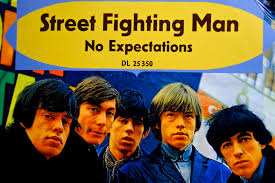
ON THIS DAY IN 1968, THE ROLLING STONES RELEASED WHAT WOULD COME TO BE CONSIDERED AS ONE OF THEIR MOST OVERTLY POLITICAL SONGS, “STREET FIGHTING MAN”

The song was inspired by Jagger’s attendance at an anti-war rally at the US embassy in London, during which mounted police forcefully attempted to control a crowd of around 25,000, as well as by similar protests in Paris, where student rioters were responded to with violence.

Recorded at Olympic Sound Studios in April-May, 1968, Jagger performed on lead and backing vocals alongside Keith Richards who also handled the acoustic and bass guitars, Brian Jones played the distinctive sitar and tamboura, Charlie Watts on drums and Nicky Hopkins on the piano. The songs lyrics were penned by Jagger and are still considered ambiguous in their meaning today. Some consider the song a call to revolution, while others call it an apathetic statement. Regardless, numerous critics and fellow musicians have called the song a classic, a rock anthem and an extremely significant political statement.

The song was popular on release, but was kept out of the top 40, due to the subversive and revolutionary/anti political nature of the lyrics. This was reinforced when the song was released within a week of the riots at the 1968 Democratic National Convention in Chicago, and some considered the song as having the potential to incite further violence. The censorship and banning of the song actually delighted Jagger, who gleefully stated “I’m rather pleased to hear they have banned (the song). The last time they banned one of our records in America, it sold a million.”

CHRIST YOU KNOW IT AIN’T EASY
JOHN AND YOKO’S BATTLE FOR PEACE

Printed & Ebook Available here

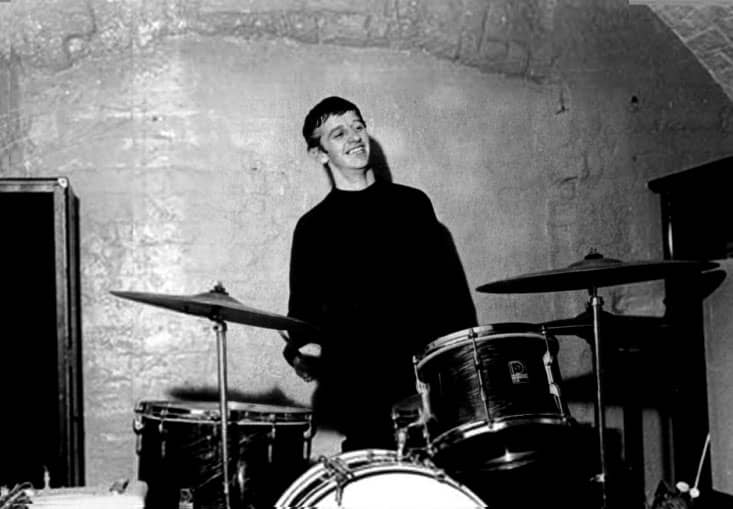
ON THIS DAY IN 1968, THE BEATLES TEMPORARILY LOST ONE OF THEIR MEMBERS

Ringo Starr felt frustrated with the bands efforts on The White Album, and decided to leave. He later claimed that he felt he wasn’t playing well enough and that he felt issues with the group. He first told John Lennon, claiming “I’m leaving the group because I’m not playing well and I feel unloved and out of it, and you three are really close.”

Apparently, Lennon had thought it was the other three members that were close, causing him to feel excluded, and when Ringo passed the message onto Paul McCartney, he reportedly thought the same. Ringo left for Sardinia with his family on vacation, borrowing Peter Seller’s yacht and enjoying some time on the water, around two weeks in total.

Meanwhile, the group had kept Ringo’s departure quiet for fear of a media frenzy, and in hopes he would return. When Ringo received a telegram on his holiday that read “You’re the best rock’n’roll drummer in the world. Come on home, we love you,” he packed his things and headed back to the studio, which he found the group had decorated with flowers for his return.

CHRIST YOU KNOW IT AIN’T EASY
JOHN AND YOKO’S BATTLE FOR PEACE

Printed & Ebook Available here

ON THIS DAY IN 1968, JOHN LENNON AND PAUL MCCARTNEY FINISHED THE SONG “HEY JUDE”

The song was written by McCartney, originally as “Hey Jules”, a song to comfort Lennon’s son, Julian. The song begins simply and grows in complexity as it continues along the 7 minute runtime, making it the longest single to ever top the British charts at the time. The song also spent a record 9 weeks at the top of the US charts.

“Hey Jude” was one of four singles released to launch the Beatles new label, Apple Records. The company hence titled that week “Apple Week” and sent out promotional copies to the Prime Minister at the time, Harold Wilson and a number of members of the Royal Family, including Queen Elizabeth II.

The single immediately drew positive reviews, although some felt that the songs length was a bit much. It was given the number 10 spot in Billboard’s 2013 list of “Biggest” songs of all time, and Rolling Stone put it at number 8 in its 2004 list of “500 Greatest Songs of All Time”, the highest placing Beatles song.

Julian Lennon reportedly only discovered that the song had been written for him almost 20 years after the composition, and in 1996 he spent £25,000 on the recording notes for the track, as well as a further £35,000 on assorted memorabilia. His manager stated that he was collecting the items for personal reasons, much like family heirlooms, and this is where they currently remain.

CHRIST YOU KNOW IT AIN’T EASY
JOHN AND YOKO’S BATTLE FOR PEACE

Printed & Ebook Available here

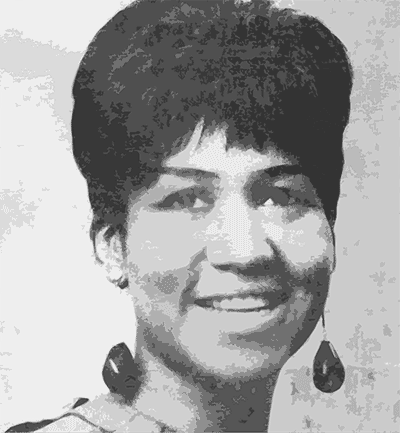
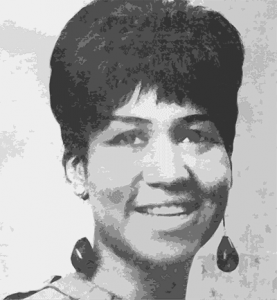
IF THERE EVER WAS any doubt that Aretha Franklin is the most significant pop happening since the Beatles, Time Magazine’s recent cover story on the soul singer has done much to dispel it.

Pointing out that Aretha is the epitome of soul music and vice versa, the weekly news magazine devoted five pages to the unprecedented selling power of nitty-gritty rhythm and blues in the pop record marketplace. Soul is where it’s at, and Aretha Franklin is soul’s sweetest voice.

The 26-year-old daughter of a Detroit Baptist evangelist, Aretha has come a long way—in fame, fortune and technique—since joining Atlantic Records 18 months ago. When she comes to Toronto’s Maple Leaf Gardens on Sunday, Aug. 18, she’ll be guaranteed a reported $20,000—more than any artist in the lucrative pop one-nighter business.

Aretha has received an incredible seven gold records during her short, but fruitful association with Atlantic. Her newest album, Aretha Now, is well on the way to earning her another gold disc, after just a few days of release. In this fourth Atlantic album, Aretha has successfully endeavored to lean heavily on the gospel idiom (from which much of her inspiration is derived) while maintaining enough sophisticated elements of contemporary blues to keep the average pop fan content.

Her current hit single. Think, is featured along with its B side, a driving uptempo rendition-of Sam Cooke’s You Send Me. Probably the most successful and stimulating selection in the album is Aretha’s gospel-tainted version of the recent Dionne Warwick hit, I Say A Little Prayer.

Dionne is no run-of-the-mill song stylist herself, yet Aretha has breathed something new and unique into the song, giving it added dimension. Rarely does she take the lead vocal of the Bacharach-David tune; instead she leaves the lyric explanations to her excellent vocal group, the Sweet Inspirations, all the while punctuating the message with joyful cries of “forever!”

CHRIST YOU KNOW IT AIN’T EASY
JOHN AND YOKO’S BATTLE FOR PEACE

Printed & Ebook Available here

There’s ample reason to believe that this is one of the most effective vehicles yet uncovered for Aretha’s outstanding talents. As is customary with an Aretha Franklin album, the soulster lends her style to several R & B standards. In Aretha Now, the standard material includes Don Covay’s See Saw, Night Time is the Right Time (made famous by Ray Charles) and the Sam and Dave evergreen, I Take What I Want.

Night Time appears, at least initially, to be most suited to Aretha’s gasping gospel delivery, and she endows it with all the joy and earthiness which abounds in the Negro culture. It’s doubtful if even Ray Charles could generate such uninhibited fervor.

Of the new material unveiled in the album, Hello Sunshine, a song written by saxophonist King Curtis (who returns to Le Coq’D’or on July 27) looms as the most likely single. Ronnie Shannon, who penned the million-selling Baby I Love You, has two worthy new contributions in Aretha Now—You’re A Sweet Sweet Man and I Can’t See Myself Leaving You.

In the latter, Aretha for the first time has displayed a degree of innocence and naivety which had previously been lacking in her oh-so-experienced and I’ve-seen-it-all approach. The melody line is especially evocative, giving promise of a possible single release.

The remaining offering of the album is another original, simply titled A Change, in which Aretha completely surrenders to her gospel background. It is the hope and dream of love’s salvation; the light is ahead and Aretha reaches out and grasps it.

The sidemen have done a superlative job in this album, speeding along the gospel-blues road with blistering pace, diverse rhythm, and occasional subtlety. Working without charts, they make music as they feel it, and the results are enthralling. There is nothing surprising in Aretha Now; nor was there expected to be.

It is more a maturity of style; the fulfilment of earlier works. Aretha and her producers have essentially played it safe, with reason. In a recent interview, she told me: “We’d be fools to change what we’ve got going for us now. The public has taken to it, and we’re not going to disappoint them by heading off into side-currents or temporary trends. Our sound is mainstream, straight down the middle.”

Artists, writers and all creative people can only give what they themselves have experienced. In this regard, Aretha has great advantage. She does not deny widely circulated stories that her marriage has caused her much sorrow. She admits that ghetto childhood is a permanent scar.

Aretha sings the blues so effectively because she knows them. In its feature, Time said English critics (who are generally ahead of their American counterparts in this field) have hailed Aretha as the new Bessie Smith. This is no small honor, and no exaggeration.

Aretha has brought pop music back home; to the southern fields and wayside churches where it was born. It was “discovered” by Presley and company in the mid-Fifties, revived by the Beatles, and abused along the way.

Now it has found a worthy homecoming in the form of a genuinely talented girl whose only desire is “to keep on singing about the things I feel and the way I feel them.”

ON THIS DAY IN 1968, JIM MORRISON INCITED A RIOT AT A PERFORMANCE IN CHICAGO, THE FIRST CONSCIOUSLY CREATED RIOT OF HIS CAREER

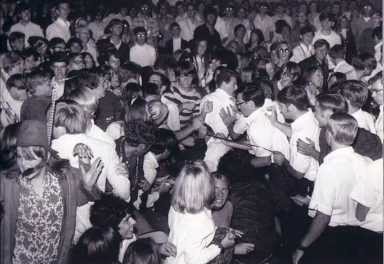
Morrison, playing at Chicago venue, The Coliseum, was frustrated with his band, The Doors and began a self-destructive path that would lead to his eventual death in 1971. He also grew angry with the way the audience was treated by policemen, and began writhing, leaping, sliding along the floor and placing maracas into his trousers.

The crowd of around 4,000 was quickly incensed and rushed forward, eventually destroying the stage and clashing with police as The Doors played over the top before escaping through a back exit. Morrison escaped charges on this occasion but was charged for other riotous performances and indecent exposure at a concert later that year.

Some fans have speculated that the lyrics of The Doors song, Peace Frog, are related to the incident at the Chicago Coliseum rather than the police riots at the Chicago Democratic National Convention.

LED ZEPPELIN
LED to GOLD

Printed & Ebook Available here

ON THIS DAY IN 1968, PIERRE ELLIOTT TRUDEAU IS SWORN IN AS THE 15TH PRIME MINISTER OF CANADA

A popular leader, Trudeau’s administration lasted all the way until 1984, making him the third longest serving Prime Minister in Canada’s history after serving for a total of 15 years. His career is considered polarising, as his supporters credit his intellect, while his critics call him arrogant. He was the Prime Minister who introduced Canada’s famed bilingualism, as many Canadian’s supported speaking French at the time. Trudeau envisioned Canada as a bilingual confederation in which all cultures would have a place, and later said he regretted introducing bilingualism as a term as it caused limitations on that front.

Trudeau was the Prime Minister of Canada during Ritchie Yorke’s residency in the country. Ritchie praised Trudeau’s commitment to the arts after the PM implemented programs that gave funding to Canadian film and broadcasting companies, and though these laws are sometimes still considered controversial, Canadian media industries only grew and solidified during Trudeau’s reign. Ritchie was introduced to Trudeau by his friend, Patrick Gossage, who was currently working as the PM’s press secretary. Through this connection, Ritchie was not only able to connect the Lennon’s with Trudeau, but also established a friendship with the Prime Minister.

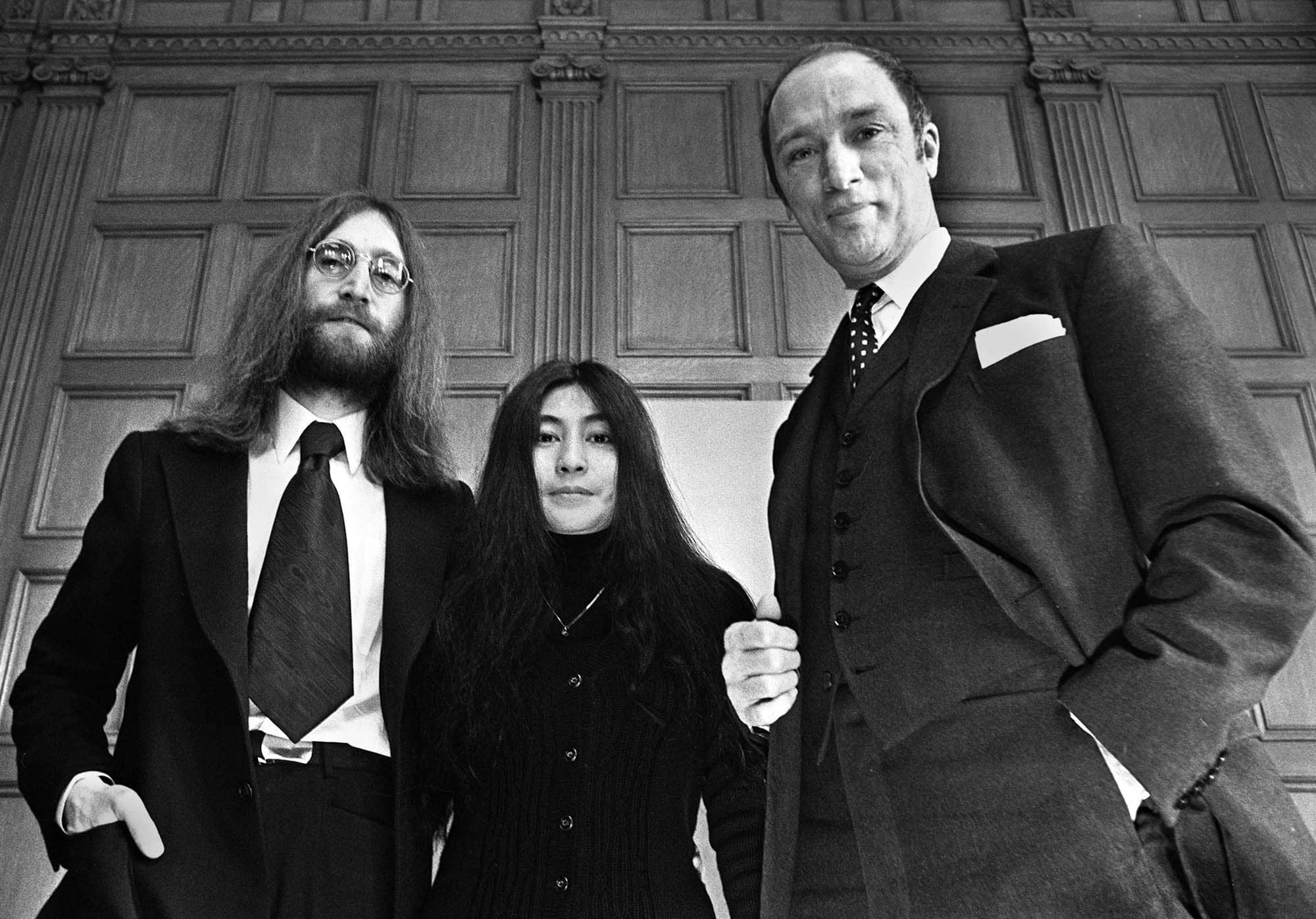
Ritchie also oversaw the widely publicised meeting between John Lennon and Yoko Ono and the Canadian Prime Minister. The couple met Trudeau on the 23rd December, 1969 and they talked for almost an hour. Lennon and Ono used the time to push their message of peace to Trudeau, a message he took kindly to, as the ex-Beatle and his wife called him “a beautiful person”. Trudeau was the first politician to accept a meeting from Lennon, and it is commonly seen as a pivotal moment for musicians to be able to speak their opinions on the world’s issues. More information about the meeting and the other events of the Canadian leg of the War Is Over! campaign can be found here.

Pierre Elliott Trudeau remains highly regarded by Canadians, and his legacy is fondly remembered. He is praised for his fierce representation of the Canadian identity and he is regarded as one of the most dominant and transformative figures in Canada’s political history.

CHRIST YOU KNOW IT AIN’T EASY
JOHN AND YOKO’S BATTLE FOR PEACE

Printed & Ebook Available here