August 14, 1969, Globe and Mail

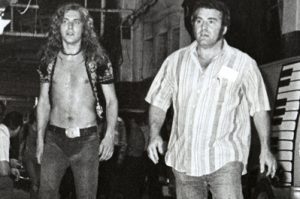
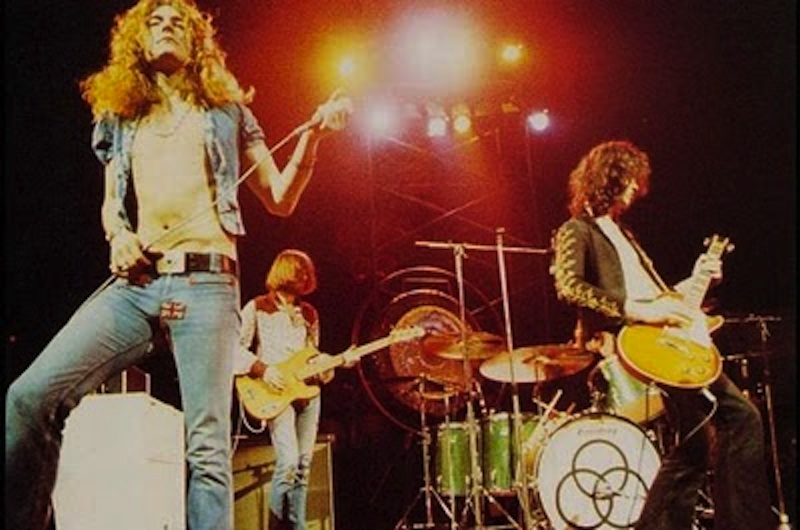
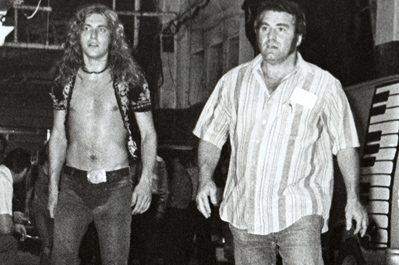
 Jimmy Page, the lithe, lean lead guitarist of Led Zeppelin, was sitting in the mixing room of A & R Studios in New York, sipping tea and munching a prune Danish pastry. His hair hung six inches below the collar line, and his red velvet bells harmonized with the burgundy patent boots—if not with the pink brushed velvet Edwardian jacket.

Page had flown in from Salt Lake City, and he would be returning to the airport in an hour to catch a flight to Los Angeles. It had been a long day, but the 24-year-old-guitarist was in lively spirits.

The track he was mixing (called “Bring It On Home”) sounded like Sonny Boy Williamson mixed with Jimmy Page. Actually, it was Led Zeppelin’s lead singer, Robert Plant, trying to sound like Williamson and doing a pretty fine job of it.

Page was racing against time to get this, the band’s second album, out by the end of the month. Led Zeppelin’s first album, released last January, has sold 500,000 copies and earned a gold record. And so Page felt the time had come for a new album.

“We’ve been so busy,” he said, “that we just weren’t able to go into the studio and polish the album off. It’s become sort of ridiculous. I mean, we’d put down a rhythm track in London, add the voice in New York, put in harmonica in Vancouver, then come back to New York to do the mixing.

“When we got together last November, we never expected to be as big as this. We just wanted to be able to come over here to work a couple of times a year. But it’s almost got out of hand.”

In the past couple of months Led Zeppelin has emerged as the most important English group working in North America.

The quartet’s second tour, which brings it to Toronto for two shows with Edward Bear at the Rock Pile on Monday, has been breaking attendance records with amazing ease. More than 10,000 people in Dallas, 10,000 in Chicago, 10,000 in Los Angeles; an incredible 8,000 at Santa Barbara against Blood, Sweat & Tears and Johnny Winter at a nearby location the same night. There can be little doubt that Led Zeppelin is the English band of the moment, including Blind Faith.

One reason is the emergence of singer Robert Plant as the most significant sex idol since Jim Morrison. Initially, Led Zeppelin was all Page but now, with Plant doing a great job of turning on the girls, the band has found a much wider acceptance.

Despite all the raves and monetary return (the band will earn more than $350,000 on this tour) that have come Led Zeppelin’s way, Page has remained remarkably modest and honest: “There are so many guitarists around who are better than me. Everywhere I go I hear some cat who sounds better than I do. That’s the trouble: everyone’s good these days.”

Early next month Page is taking a month off to relax. He intends to travel through Morocco and Spain. Then the band returns to North America for a short tour, which is kicked off by two concerts at Carnegie Hall. They were sold out weeks ago.

“This tour has been fantastic, but you can never be too sure. We’ve got to work even harder now. You can’t rest on your laurels. It’s easy to go down just as fast as you went up. I think what did it for us was the stage thing. We came here unknown on the first tour, did our number, and the word got out that we were worth seeing. We tried as hard as we could on stage and it worked.”
CHRIST YOU KNOW IT AIN’T EASY
JOHN AND YOKO’S BATTLE FOR PEACE

Printed & Ebook Available here

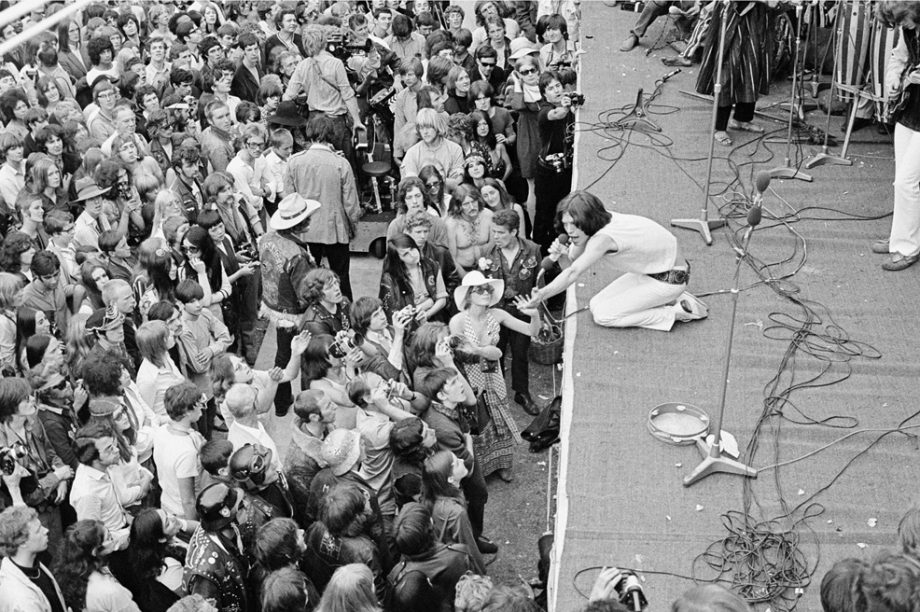
ON THIS DAY IN 1969, THE ROLLING STONES PLAYED A FREE FESTIVAL IN HYDE PARK, LONDON

The gig, named The Stones in the Park, was organised by the band as a way of introducing their new guitarist, Mick Taylor. However, as usual for the Stones, things didn’t go to plan after the death of guitarist Brian Jones just two days earlier. This turned the event into a memorial of sorts, as Mick Jagger read a eulogy and released a sack full of white butterflies before the group played.

The festival was undoubtedly an important one, as the group had rarely played in the last two years due to difficulties with Brian Jones. Mick Jagger stated beforehand that he felt that the band was best live and he was keen to return to the stage. He also claimed making the festival free would make the experience more enjoyable for the attendees, though the costs were covered by selling exclusive television rights to Granada Television.

Also performing at the festival was King Crimson, Screw, Third Ear Band and more. Interestingly, King Crimson had yet to release an album and were hired on the strength of word-of-mouth. The Stones set is considered by many to be a poor performance due to out of tune guitars and lack of practice, though this caused more intense preparation for their next tour. Park rangers were concerned by the mess at the end of the gig, but impressed with the Stones commitment to clearing up, as well as their recruitment of fans to help, with the promise of a free LP for every full sack of rubbish returned.

CHRIST YOU KNOW IT AIN’T EASY
JOHN AND YOKO’S BATTLE FOR PEACE

Printed & Ebook Available here

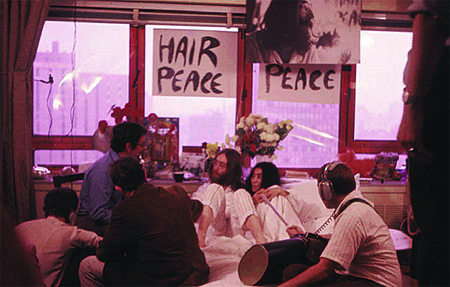
ON THIS DAY IN 1969, JOHN LENNON AND YOKO ONO WERE POSTED IN BED, HALFWAY THROUGH THEIR SECOND BED-IN, AT THE QUEEN ELIZABETH HOTEL IN MONTREAL

After the initial success of their first bed-in event in Amsterdam, the couple decided to duplicate the idea in other locations. Originally planned for New York, Lennon’s cannabis conviction swiftly ended that idea and the Bahamas were selected before the heat caused the pair to change their minds and head on to Montreal.

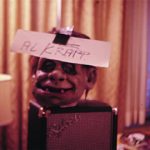
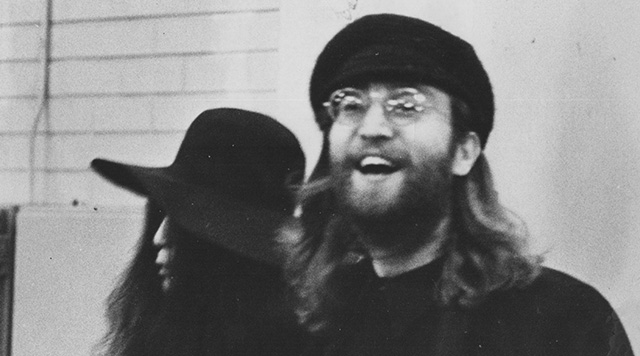
A number of celebrities and journalists were invited to the room to meet the couple and join the message for peace. Guests such as Timothy Leary, Tommy Smothers and Dick Gregory all made it to the room to join in, while infamous cartoonist Al Capp made it to attempt to provoke the pair. A video of their encounter is available here. The confrontation inspired John and Yoko to make a voodoo doll for the obnoxious cartoonist, pictured left. The invited guests, bar Capp, all joined in to record the impromptu single “Give Peace A Chance”, now regarded as on the most renowned anthems for peace amongst any artist. Canadian, American and world presses alike reported on the story, albeit with mixed reactions.

The bed-in went on to inspire numerous artists to reference the event or hold their own bed-ins, also in the name of spreading the peace message. Not only this, but the Lennon’s are also credited with being amongst the first figures to use their popular culture notoriety to try and affect change around the world. There is an available film of the bed-in made in conjunction with Yoko Ono that can be found on her Imagine Peace website and linked above.

CHRIST YOU KNOW IT AIN’T EASY
JOHN AND YOKO’S BATTLE FOR PEACE

Printed & Ebook Available here

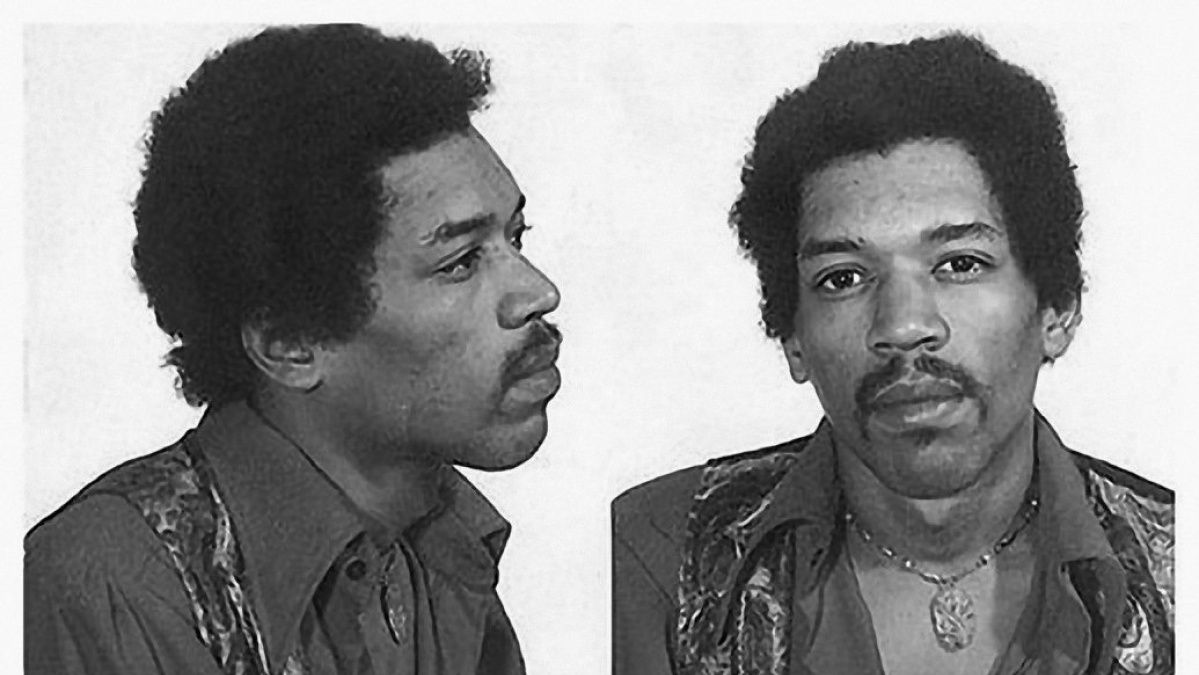
ON THIS DAY IN 1969, JIMI HENDRIX WAS ARRESTED AT TORONTO INTERNATIONAL AIRPORT FOR NARCOTICS POSSESSION

On May 3rd, Hendrix flew into Toronto and was detained by The Royal Mounted Canadian Police after small amounts of hashish and heroin were found in his luggage. Hendrix admitted to using hashish and cannabis but denied any association to the heroin, citing a fear of needles and junkies which stopped him from using the substance. He claimed that a female fan had gifted him a vial of Bromo-Seltzer, a legal medication, without knowledge that it contained heroin.

Hendrix was released hours later on $10,000 bail with arraignment hearing set for May 5th and a court date of December 8th. Other musicians and fans have speculated Hendrix’s arrest as part of a conspiracy to crackdown on rock musicians organised by the government. Supporters of this theory also mention the numerous other drug arrests plaguing popular rock artists like John Lennon and Mick Jagger. Some also considered a set-up possible, due to Hendrix’s denial of involvement with heroin and the suspicious presence of the Mounted Canadian Police, who did not customarily make arrests at the airport.

During his December 8th trial, Jimi Hendrix was apprehensive but confident in his defence team. One of the witnesses called to give a character reference was none other than Ritchie Yorke, who had volunteered for the role. Hendrix was acquitted later that day and presented one of his trademark hats to Ritchie, which remains in his archive today. After receiving his not guilty verdict, Hendrix said to the press that “Canada has given me the best Christmas present I ever had”, while holding up a peace sign.

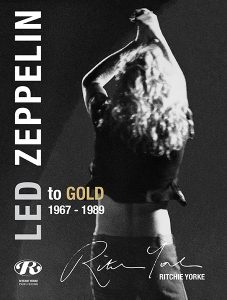
LED ZEPPELIN
LED to GOLD

Printed & Ebook Available here

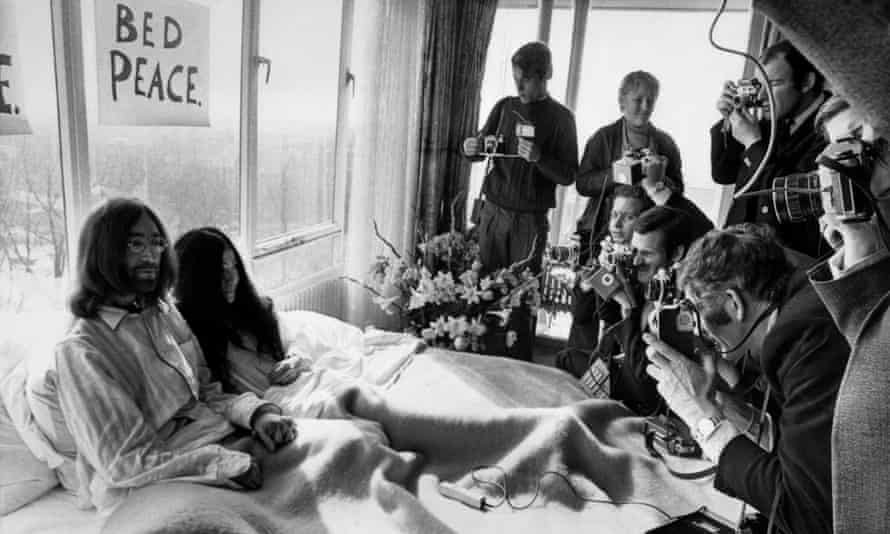
On this day in 1969, John Lennon and Yoko Ono began their Bed-in for Peace in Amsterdam

 As the Vietnam War raged on, Lennon and Yoko realised that their wedding on March 20 would attract huge media attention, and that they could use that attention to bring the public’s focus to a worthy cause: peace. The decision was made to stay in bed for a week for their honeymoon, and field questions from the press from 9am to 9pm each day.

The pair set up a room in the Amsterdam Hilton Hotel with signs above them reading “Bed Peace” and “Hair Peace” along with multiple bouquets of flowers. After promoting the event as a love-in and with the recent release of nude photographs by the pair, some press expected to find the couple engaging in conjugal acts but were surprised to find them dressed conservatively in full pajamas buttoned to the top, and ready to discuss and promote peace.

The Amsterdam Bed-in was such a success it spawned a follow-up in Montreal, organised in part by Ritchie Yorke, where the renowned “Give Peace A Chance” anthem was recorded. The pair then went on to plan a larger scale campaign for peace with press conferences, meetings with world leaders and the famous “War Is Over!” poster promotion.

CHRIST YOU KNOW IT AIN’T EASY
JOHN AND YOKO’S BATTLE FOR PEACE

Printed & Ebook Available here

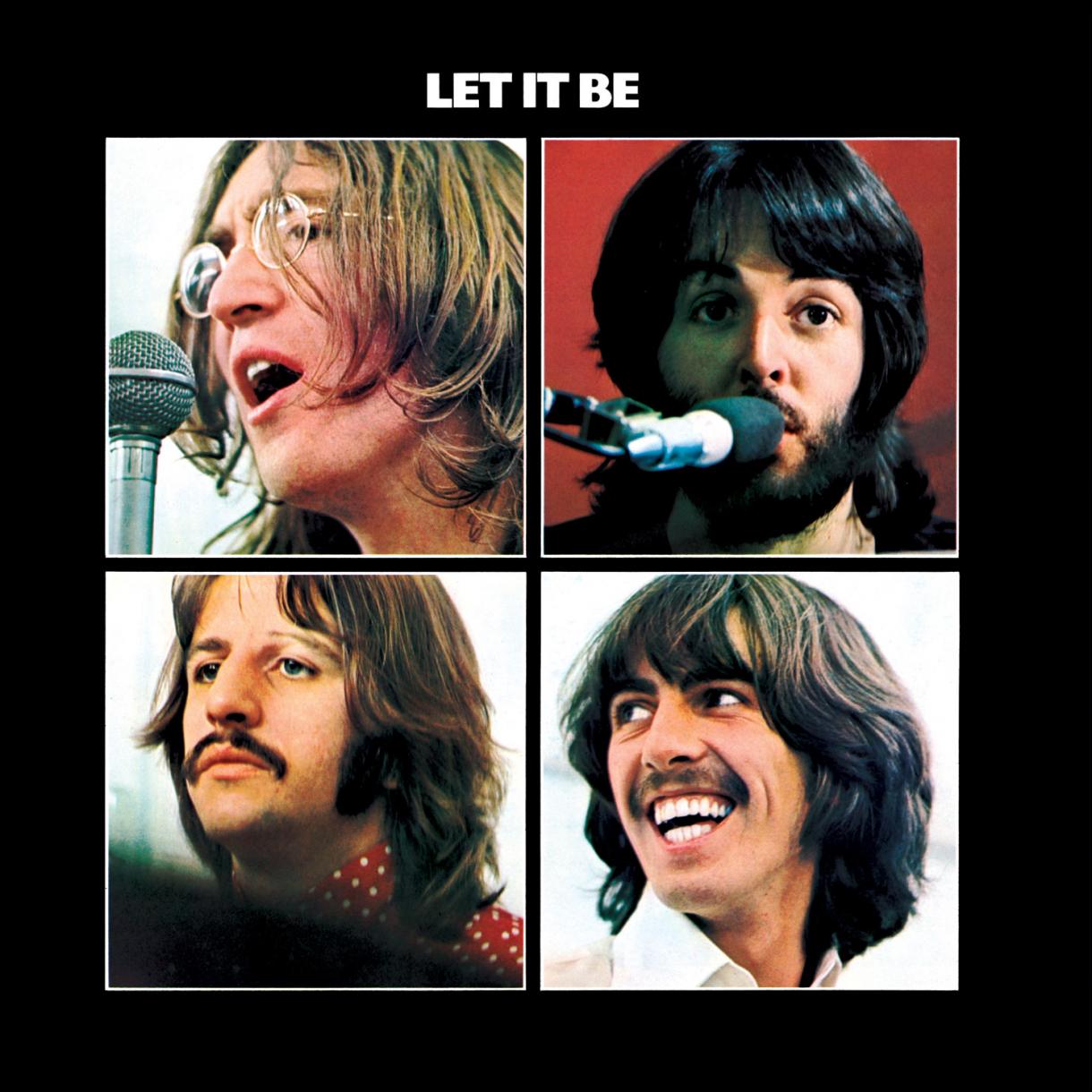
ANOTHER GOOD DAY FOR THE BEATLES TODAY, AS THEY SET ABOUT RECORDING “DIG IT” FOR THEIR TWELFTH AND FINAL STUDIO ALBUM, LET IT BE ON THIS DAY IN 1969

The first take of the song had been recorded two days earlier but this take included a segment that would actually be used on the album, unlike the other versions. Two more versions were recorded later but also unused on the album. John Lennon reportedly dominated the song, utilising lyrics from “Twist And Shout” and Bob Dylan’s “Like A Rolling Stone”, along with his own improvisations while strumming a six-string bass guitar.

The song came about as a result of an extensive 15 minute jam session, loosely based on Dylan’s “Like A Rolling Stone” and the excerpt used on the album was recorded at this session. It included features from Billy Preston on organ and George Martin on percussion, as well as an impromptu vocal contribution from Linda McCartney’s six-year-old daughter. Interestingly, this song is also one of few songs to be credited to all of the Beatles.

   Though the session lasted around 15 minutes, the excerpt used on the Let It Be album lasted only 51 seconds, later extended in various other mixes to a total of 8 minutes, although the song is notably absent from Let It Be… Naked, replaced with “Don’t Let Me Down”.

In charge of production on this track was notorious Phil Spector, developer of the Wall of Sound formula to rock and roll production, and later murder convict. This song was recorded during a time considered to be Spector’s attempt at a comeback to the music industry after a brief hiatus from the public eye. Paul McCartney later criticised Spector’s efforts on the album, particularly “The Long and Winding Road”, although Spector was defended by Lennon who stated “He was given the shittiest load of badly-recorded shit with a lousy feeling to it ever, and he made something of it”.  Both he, and George Harrison went on to have Spector co-produce their solo efforts while McCartney went on to spearhead the project Let It Be… Naked, which stripped the album of Spector’s contributions.

Also occurring at this time was the gradual split of the band. John Lennon and Paul McCartney were no longer working together as they had in the past, Lennon now seeming more concerned with spending time and making music with his bride-to-be, Yoko Ono. George Harrison was also frustrated by the situation and quit the band at one point, although returned to finish the album. This led to a somewhat confused release that was a commercial success but suffered from mixed reviews by critics, although the film of the same name released alongside the album fared slightly better.

CHRIST YOU KNOW IT AIN’T EASY
JOHN AND YOKO’S BATTLE FOR PEACE

Printed & Ebook Available here

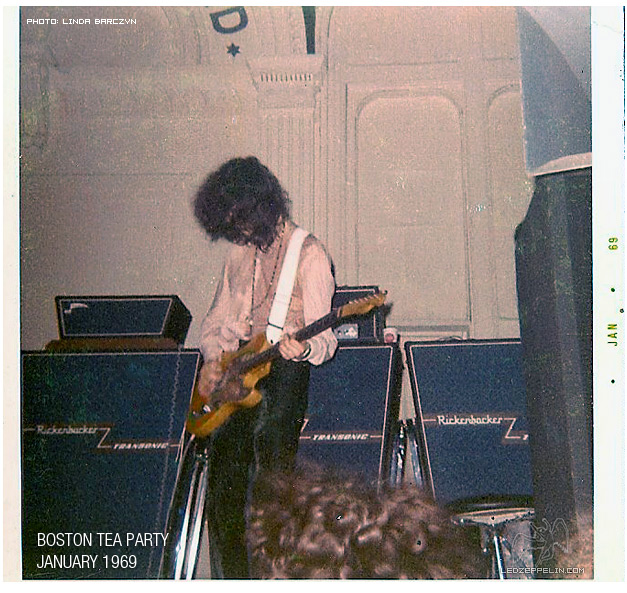
ON THIS DAY IN 1969, LED ZEPPELIN GOT A GLIMPSE OF THEIR FUTURE SUCCESS WHEN THEY PLAYED AT THE BOSTON TEA PARTY DURING THEIR FIRST AMERICAN TOUR

The 26th of January, 1969 is also a notable day for Led Zeppelin, as they played a hugely successful show at the Boston Tea Party that would give the band a glimpse of their potential success. John Paul Jones was quoted as saying in NME magazine “the key Zeppelin gig, the one that put everything into focus was the one we played on our first American tour at the Boston Tea Party,” and went on to say “I suppose it was then that we realised just what Led Zeppelin was going to become”

Unfortunately, no video exists of this show, but audio of the entire concert has been captured and uploaded. The press release is also available to be viewed here.

LED ZEPPELIN
LED to GOLD

Printed & Ebook Available here

January 11, 1969, Globe and Mail

Much to their surprise—and delight—record companies have discovered that they can sell stacks of albums without getting once-vital radio exposure. They have even found that they can sell a groups LP even if it has never made a record.

The truth of this unlikely situation is borne out by the orders for the first album by Led Zeppelin, a new English group headed by guitarist Jimmy Page.

Although the LP is still more than four weeks away from its release date in the United States, it reportedly is much in demand in California, with orders for more than 50,000 copies.

How can a group command this kind of attention when most people have not even heard of the album? The answer seems to lie with the popularity of individual musicians.

LED ZEPPELIN
LED to GOLD

Printed & Ebook Available here

In the case of the Led Zeppelin, Jimmy Page is the attraction. The 23-year-old former art student is known for his stints as bass guitarist with the Yardbirds, and later as the groups lead guitarist.

Although the Yardbirds have split up, their influence continues. Between the Yardbirds’ breakup and the formation of Led Zeppelin in October, Page worked as a recording session musician. One of his more memorable efforts was the guitar gymnastics on Joe Cocker’s single “With A Little Help From My Friends”

“I only did a few session, because I didn’t want to fall into the trap of playing on every disc coming out in England,” Page said from Los Angeles, where the group has started a North American tour.

“Since I split from the Yardies, I’ve been searching around for some guys for a new group, the right group.” The standing ovations received by Led Zeppelin at the Whisky a Go Go in Los Angeles indicate that Page’s search may be over.

Led Zeppelin’s other members are: John Paul Jones, 23, on bass, organ, and piano; drummer John Bonham, 20, who played with Tim Rose; singer, Robert Plant, 21, a former member of the Band of Joy.

The name, Led Zeppelin?

“Keith Moon, of the Who, thought it up,” said Page. “You know the expression about a bad joke going over like a lead balloon. It’s a variation on that; and there is a little of the Iron Butterfly light-and-heavy music connotations. 

Led Zeppelin landed in Denver two weeks ago, starting a two-month tour that brings them to Toronto’s Rock Pile on Feb. 12.

“The reaction has been unbelievable so far,” said Page, who is recovering from a bout of Hong Kong flu. “It’s even better than what we got with the Yardbirds. It’s really exciting to be back on the concert trail.

“My original concept was to put together a group in which every one was proficient enough to be able to take a solo at any time, and it’s worked.

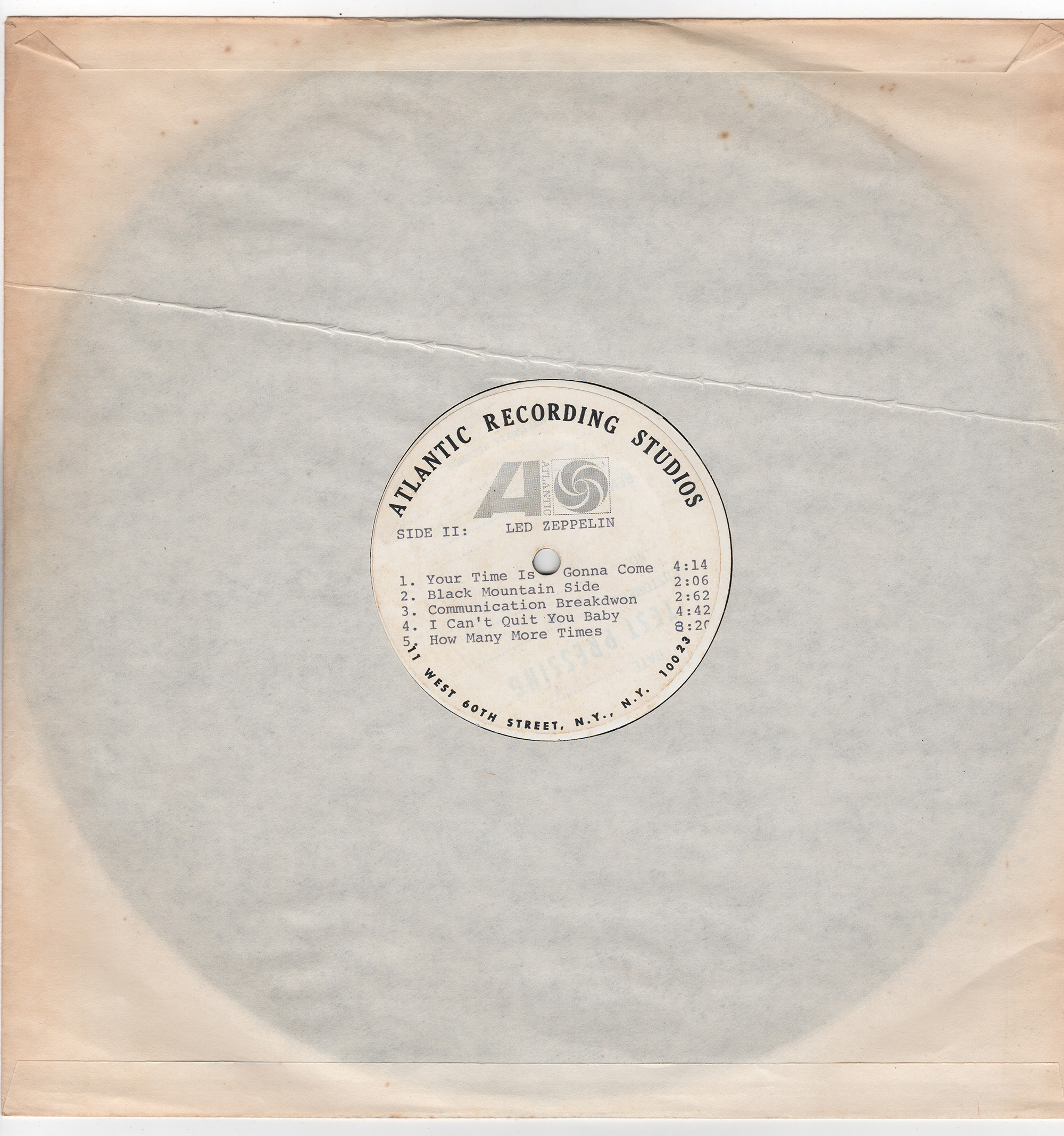
“We cut the album at Olympic Studios in London early in November. It’s all original material, except two numbers: ‘You Shook Me,’ a traditional blues, and ‘I Can’t Quit You, Baby,’ the old Otis Rush thing.”

The album, simply titled Led Zeppelin, will be released later this month. I obtained a copy from New York this week. The LP seems to live up to claims that Led Zeppelin will be the next super ground in the United States.

It’s a mixture of heavy, earthy blues (“I learned a lot from B. B. King, Otis Rush, and Buddy Guy: I used to listen to their records over and over, and then try to play exactly like that”) and wailing psychedelia.

It’s not quite as free-flowing as Cream, but in the process of adding more instrumentation and vocal harmonies, Led Zeppelin has emerged with a positive, driving, distinctive sound.

Pages guitarwork skims across the melody with a simple joy. Jones’s organ rhythms are forceful and invigorating. The whole is a rare pop experience. Unlike many groups, Led Zeppelin has managed to maintain simplicity while striving for depth.

I find this the best debut album by a group since the 1967 release of Are You Experienced? by the Jimi Hendrix Experience.

“I’m really happy to be back into it,” said Page. “There’s room for everything on the scene; you don’t have to follow any bandwagons. You just get out there and do your own thing.

“It’s a good period for guitarists. I think every good guitarist has something unique to say musically. My only ambition now is to keep a consistent record product coming out.

“Too many groups sit back after the first album, and the second one is a down trip. I want every new album to reach out farther. That’s what I’m doing here.”

TODAY MARKS A MASSIVE DAY IN ROCK HISTORY, AND A HUGE DAY FOR GREAT FRIENDS AND MUSICIANS LED ZEPPELIN.

On this day in 1969, Zeppelin released their self-titled debut after changing their name from “The New Yardbirds” after “The Who” drummer Keith Moon predicted their music was likely to “go over like a lead zeppelin”. Produced by Jimmy Page, the album was initially poorly received by critics and only reached number 10 at the Billboard charts despite it’s reputation now as one of the main influences of the hard rock genre. The publications that initially reviewed the album poorly later changed their tune and Led Zeppelin I now sits in numerous “Greatest Albums of All Time” lists compiled by the same media organisations and has gone eight times platinum in the United States alone.

Three journalists immediately saw the bands enormous potential, two British writers for Oz and Punch magazines, as well as emerging Canadian journalist Ritchie Yorke. Ritchie was awestruck by the advance copy he had been sent and published an article titled “Led Zeppelin Climbs Before It’s First LP” in the Toronto Globe and Mail in which he glowingly reviewed the new group and declared the album “the best debut album by a group since the 1967 release of Are You Experienced? by the Jimi Hendrix Experience.”

According to Zeppelin manager Peter Grant, this review marked the first press prediction of the band’s enormous international success, and it is a common belief that the review assisted greatly in changing the critical reviews of the US press.

A notable coincidence is that the albums release coincides with Ritchie’s birthday, the 12th of January. A pretty decent birthday present by anyones regard. Happy birthday Ritchie!

Click here to read Ritchie’s original article, originally published on the 11th January, 1969.

LED ZEPPELIN
LED to GOLD

Printed & Ebook Available here

THE TYCOONS JOHN, PAUL, GEORGE, RINGO

Apple Corps! Champion of the talented underdog, anti- Kstablishment’s greatest snoot-cocker, nay-sayer to the fat cats of the music world—or so proclaimed the Beatles when they launched their much-publicized business project.

But it hasn’t quite worked out that way. The Apple’s not so rosy these days and the complaints that are increasingly being heard are all directed at a white, five- story building at No. 3, Savile Row, the London headquarters of the Beatles’ fruitful empire.

A grey Rolls-Royce purrs outside the entrance. In the back seat is Paul McCartney and his latest girlfriend, Linda Eastman, a slim blonde who once worked as a photographer in New York.

Beside the Rolls stands a uniformed chauffeur, looking like a heavy from a Matt Helm movie thriller. Behind the thick, white, wooden door of Apple, a mini- skirted girl chewing bubble-gum sits grandly at a large white table. White chairs are scattered around the room. The walls are white, too. So is the latest Beatle album cover. White is in.

People come and go at Apple, just as in any other office. But here the percentage of oddballs is considerably higher than the average.

A man in his mid-thirties wanders in, one quivering hand raised above his head like a young child in school asking to go to the washroom.

He stammers as he tells the girl he sent a letter to Mr. McCartney a few weeks back. He wonders if he could speak with Mr. McCartney about his idea. The girl politely tells him a reply is surely on its way. But he wants to know the details of the reply. Was his letter ever received by Paul? Don’t they know he can’t sit around all day waiting for Mr. McCartney?

The girl suggests the man sit down and write another note. He lowers his hand, sits down and starts writing.

While the man writes and mutters to himself, the girl winks at me. Someone else comes in and asks for an Apple executive. He is also told to wait. Waiting is the way things are done at Apple.

A middle-aged man with long sideburns glides out of the inner offices, passes a phony-sounding compliment to the girl, ‘strides out the door, into the Rolls, and kisses McCartney’s girl. The car pulls away.

The letter writer, meanwhile, has thrown away two sheets of paper and is using a third, all the while twitching. Suddenly he leaps Tap and starts wildly stroking the white seat cover. S”

“I’m a film maker,’’ he shouts, “and I’ve got dirty pants and I’m messing up your nice chairs! No, I’m a celluloid man. That’s better.” He writes a few more words. And then he jumps up again and shouts: “Why don’t they all leave me alone?”

This scene is not unique at Apple, I was told. Unbalanced people are attracted by Apple’s promise of artistic understanding and financial backing.

Terry Doran. 28, director of Apple Publishing, said when the company was formed: “Because the Beatles have made a lot of money, people expect that they’ll retire and just go off and enjoy themselves. But they are interested in creating, and they want to help people- young people with talent and ambition who find that no one wants to listen to them.”

Said John Lennon: “The aim of the company isn’t a stack of gold teeth in the bank. We’ve done that bit. It’s more of a trick to see if we can get artistic freedom within a business structure; to see if we can create things and sell them without charging three times the cost.”

Said Paul McCartney: “We want to help other people, but without doing it like charity and without seeming like patrons of the arts. We always had to go to the


big man on our knees, touch our forelocks and say. ‘Please, can we do so and so?* And most of those companies are so big, and so out of touch with people like us who just want to sing or make films, that everyone has a bad time.

“We are just trying to set up a good organization, not some great fat institution that doesn’t care. We don’t want people to say yessir, nossir. We hope that at Apple if someone can produce a record better then me they’ll say so: I’m not on some big ego trip. I mean, we re in the happy position of not needing any more money, so the first time the bosses aren’t in it for the profit. If you come to see me and say, ‘I’ve had such and such a dream,* I will say, ‘Here’s so much money. Go away and do it’.”

In short. Apple looked like Utopia for young people frustrated by the Establishment way of not getting things done. No red tape, no begging for a break. A sympathetic, turned-on ear seemed to be the system in Apple Corps.

But many people working in the London music business think Apple Corps has not lived up to its early promises. Their main complaint has to do with the claims Apple made when it was set up six months ago. Rather than becoming a benevolent uncle it appears the Apple organization has joined the Establishment: its attitude to struggling, undiscovered young* tdlent is one of indifference.

Apple is basically a holding company of publicly unknown assets, although speculation puts its original financial backing at $2.4-million. It employs about 50 people, including Ron Kass. a former overseas representative of a U.S. record company, and Alexis Mardas, a Greek who is reputed to be a budding electronics genius.

At one time it also operated at the retail level, with an Apple Boutique in Baker Street. But that closed—and about $42,000 worth of zany mod clothes was given away —when the Beatles tired of being shopkeepers.

The company is involved not only in supplying the world with new Beatles records, but in producing films, new songs—almost anything that sells. So far Apple has released four singles and one LP.

Despite Apple’s offbeat philosophy, few doubted the company would be a financial success. The Beatles’ recording and publishing royalties alone would take care of that. Hey Jude sold more than 6-million copies. The group gets 7 per cent of 90 per cent of the retail price of each copy, which amounts to about $420,000 recording royalties on that disc alone.

CHRIST YOU KNOW IT AIN’T EASY
JOHN AND YOKO’S BATTLE FOR PEACE

Printed & Ebook Available here

It’s common to see large groups of people waiting for hours—even days—to discuss their hopes with Apple. “I’ve been there and seen hundreds of songwriters lined up,” said Barry Gibb, a member of the Bee Gees pop group. “Whenever somebody came out, they all yelled and begged for a chance to see John or Paul. It was really a pitiful scene.”

Gibb also tells a story indicating that Apple has yet to find an effective way of dealing with the egos of young talent. “Paul wanted a song for Mary Hopkin, and he called me up. I sent him one. and he called to tell me he liked it and would use it as a flip side or on the album.

“I told him to forget it. I only write A sides now. It would be humilating to do otherwise.”

Apple is having its problems with Miss Hopkin’s career. The company has received more than 1,500 songs for her, yet an executive admitted only five had been recorded. This is less than half the number of tracks required for the album which Capitol Records, Apple’s North American distributer, has been pleading for. Miss Hopkin. meanwhile, will not talk to the press.

Apple’s main trouble, said one staff member, who didn’t wish to be identified, is disorganization. He mentioned the case of a U.S. magazine which paid $4 000 for an exclusive color shot of the Beatles for a front cover. Then an executive gave prints to other magazines.

Certainly Apple’s press relations leave much to be desired, and possibly may account for the severe criticism of the Beatles by Fleet Street recently. It is almost impossible to interview the Beatles through official channels. Approaches must be made through friends, other pop stars, or girls, and even these rarely succeed.

When I attempted to obtain an interview with John Lennon, I was asked if my newspaper would be willing to pay Lennon for it.

In London you hear many stories about people who had their hopes raised by Apple, only to be disillusioned.


One of them is Clive Williams, 30, a Toronto “management counsellor” who went to London to try to Intel , est Apple in a “really different kind of Canadian furniture enterprise.”

“The first thing 1 did on arrival at London Alt (nut was rush off to Aople, bags in hand.” he said thl* • I “It felt like walking into a sticky, glutinous hall I w • very let down.”

After several days of hanging around, Williams finally saw Derek Taylor, Apple publicist. One of l a\ lor’s remarks to Williams was, “OK, man, but what will all this do for the revolution?” That apparently wh* the climax of Williams’ 4,000-mile trip.

Taylor also reportedly told Williams that Apple has no money.

“1 was sucked in by the promises of Apple being a trading post for venturesome young people who were hamstrung by the Establishment. I spent $500 trying to get Apple’s aid and all I got was abuse.

“It’s an incredibly bad scene. Apple employees don’t want to see anybody, and they do their best to put you down. Taylor was surrounded by a bunch df yes boys, who kept agreeing with everything he said.”

One unhappy employee said the Beatles should hire an experienced businessman to reorganize Apple—grey suit and white . shirt or not. McCartney seems to be aware of this. He tried to interest Lord Beeching former deputy chairman of Imperial Chemical Industries and the man who modernized the British railway system, in taking over Apple.

“I’d like to help the Beatles, as I greatly admire their talent, but it is not an appointment to which I could give total involvement as I see it now,” Lord Beeching said.

One disillusioned Apple consultant said he was disgusted by the lack of sincerity among other employees, though not necessarily the Beatles themselves.

He even suggested that unless there is a radical change in the way things are running at Apple, the Corps might well turn into a corpse.