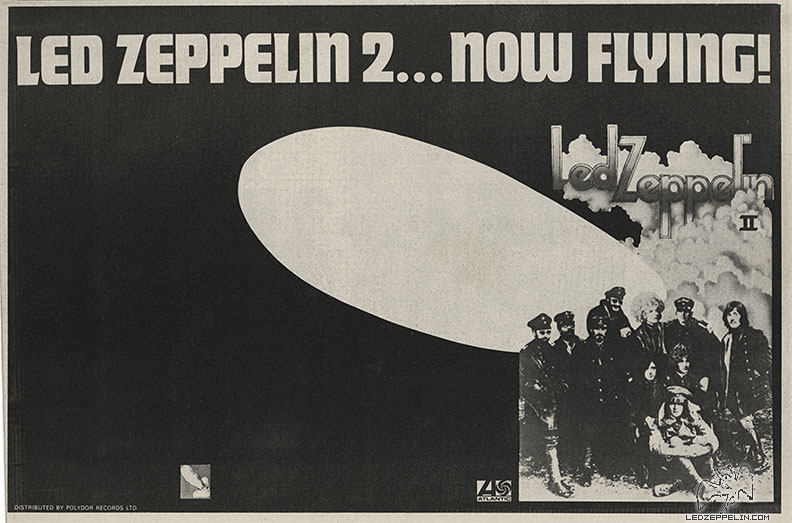
On this day in 1969, Led Zeppelin’s second album, Led Zeppelin II, was released in the US

The album was written while the band toured with their first release and recorded in short sessions in between concerts in various studios throughout the UK and North America. Some of these studios were clearly ill-equipped with one studio in Vancouver, credited as “a hut” had an 8-track recording set-up with no proper headphone facilities.

Several songs on the album were a result of experimentation during live performances, especially during the instrumental sections of “Dazed and Confused”. The songs featured an evolution of the sound they had created with their debut album and was later called the blueprint for heavy metal.

Critically, the album was a huge success with popular critics reviewing it positively, speaking on its sophistication, intelligence and simplicity. Led Zeppelin II also performed well commercially, becoming the group’s first album to reach number one in the US, knocking The Beatles Abbey Road from the top spot twice. It also reached top five spots in Australia and Canada. Ritchie Yorke commented on the album to Billboard, stating that it was considered unsuitable to North American Top 40 radio stations, who were “dreary and detached from the mainstream of contemporary rock music”.
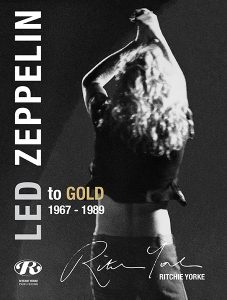
LED ZEPPELIN
LED to GOLD

Printed & Ebook Available here

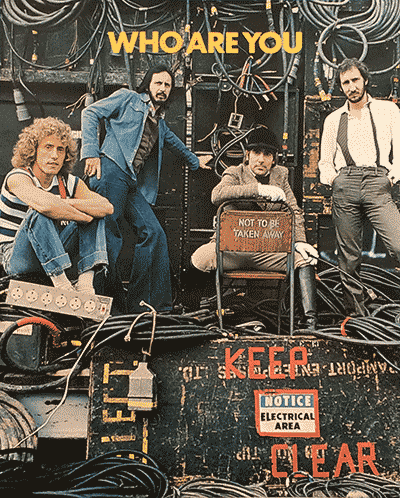
It was back to the cow palace last night, when The Who presented its pop opera, Tommy, in the CNE Coliseum before about 4,000 fans. Most of the audience sat in sawdust and suffered a sound system that could not have been worse if the show had been presented in the washrooms at Nathan Phillips Square.

As The Who’s Pete Townshend said on stage: “We regret having to play in this garbage can, for your sake more than ours.” Nevertheless it was an exciting concert, made so by the sheer forcefulness of The Who.

I doubt if there is a group anywhere—the MC5 included —which could have topped the pungent, piercing rock which this English quartet offered. The Who possess most of the things which have been lacking in much of pop lately—hard-hitting drive, a sense of theatrics, a purpose in deliver. The pop opera, Tommy, the group’s tour de force and something of a landmark in pop was offered in its entirety; the performers acting out the roles as they played. It was quite a sight, even if there was a lot missing acoustically after the raw twangs and cymbal crashes had been filtered through a fumble 0f beams and poles.

Visually The Who’s concert came close to topping the last Led Zeppelin appearance, and was far superior to Blind Faith. Two things emerged from the concert. The first is that Tommy may well be the most important pop musical operatic attempt since George Gershwin’s Porgy and Bess. The other point concerns Toronto’s serious lack of good places for pop groups to play. Last night’s Coliseum farce made it clear just how much the local rock scene misses the Rock Pile.

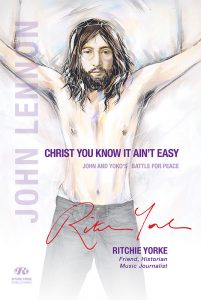
CHRIST YOU KNOW IT AIN’T EASY
JOHN AND YOKO’S BATTLE FOR PEACE

Printed & Ebook Available here

LONDON — Abbey Road is a short street in North London with only one distinctive feature; it houses the studios of EMI, a record company. In the next few weeks, however, it seems certain that Abbey Road will become as well known internationally as Portobello Road, Petticoat Lane and Carnaby Street.

The reason for this is that the new Beatles’ album—the group’s 19th—has been named after it because all of the Beatles’ hits were recorded in the Abbey Road studios. The toils of the Beatles in this very ordinary thoroughfare have accounted for the sale of 290 million records, a fact which makes even a normally grim-faced man such as Harold Wilson break into a grin.

Abbey Road will be released in North America next Monday. In London last week, at the group’s Apple headquarters in Savile Row, George Harrison—who is reputed to be the sanest and least weird Beatle—discussed the new album:

“Come Together, the first track on side one, was one of the last tracks to be recorded. John wrote it a month ago, just after his car accident. It’s one of the nicest things we’ve done musically. Rin- go’s drumming is great (Ringo, sitting across the room, grinned). It’s an upbeat, rock-a-beat-a-boogie, with very Lennon lyrics.

“Something is a song of mine. I wrote it just as we were finishing the last album, the white one. But it was never finished. I could never think of the right words for it. Joe Cocker has done a version too, and there’s talk of it beings the next Beatles’ single. When I recorded it, I imagined somebody like Ray Charles doing it, that was the feel I thought it should have. But because I’m not Ray Charles we just did what we could. It’s nice though, probably the nicest melody I’ve ever written.

“Maxwell’s Silver Hammer is just something of Paul’s. We spent a hell of a lot of time recording this one. It’s one of those instant, whistle-along tunes which some people will hate and others will love. It’s like ‘Honey Pie’, a fun sort of song, but probably sick as well because the guy keeps killing everybody. We used my Moog Synthesiser on this track, and I think it came out effectively.

“Oh! Darling is another of Paul’s songs which is typical 1950-1960 sort of period in its chord structure. It’s a typical 1955 song which thousands of groups used to make—the Moonglows, the Paragons, the Shells and so on. We do a few ooh-oohs in the background, very quietly, but mainly it’s Paul shouting.

“Octopus’s Garden is Ringo’s song, the second he’s written. It’s lovely.

“Ringo gets very bored playing the drums, so at home he plays the piano. But he only knows about three chords. And he knows about the same on guitar. He mainly likes country music.

“I Want You (She’s So Heavy) is very heavy. It has John playing lead guitar and singing the same as he plays. This is good because the riff he sings is basically a blues.

It’s a very original Lennon-like song . . . The middle bit is great . . . John has an amazing thing with his timing.

“Here Comes the Sun, the first cut on side two, is the other song I wrote for the album. It was written on a very nice sunny day in Eric Clapton’s garden. We’d been through real hell with business, and it was all very heavy. Being in Eric’s garden felt like playing hooky from school. I found some sort of release and the song just came. It’s a bit like If I Needed Someone with that basic riff running through it. But it is very simple, really.

“Because is one of the most beautiful things we’ve ever done. It has three-part harmony— John, Paul and George. John wrote the song, and the backing is a bit like Beethoven. It does resemble Paul’s writing style, but only because of the sweetness it has. Paul usually writes the sweet things and John does the rave-ups and freakier things. But every now and then, John just wants to write a simple 12-bar thing.

“I think this is the tune that will impress most people. Hip people will dig it and the straight people and serious music critics will too. It’s really good.

“Then begins the medley of Paul and John songs all shoved together. It’s hard to describe them unless you hear them at the same time. You Never Give Me Your Money is like two songs, the bridge of it is like a completely different song. You whip out of that and into Sun King, which John wrote. He originally called it Los Paranois.

“Mean Mr. Mustard and Polythene Pam are two short songs which John wrote in India 18 months ago.

“She Came In Through the Bathroom Window is a very good song of Paul’s with great lyrics. Golden Slumbers is another very melodic song by Paul which links up.

“Carry That Weight keeps coming in and out of the medley all the way through.

“The End is just that, a little sequence which ends it all.”

CHRIST YOU KNOW IT AIN’T EASY
JOHN AND YOKO’S BATTLE FOR PEACE

Printed & Ebook Available here

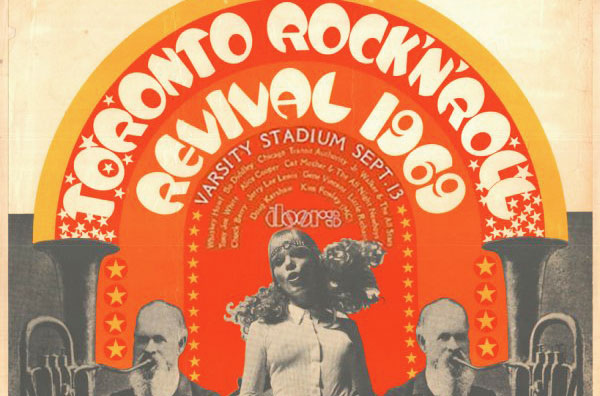
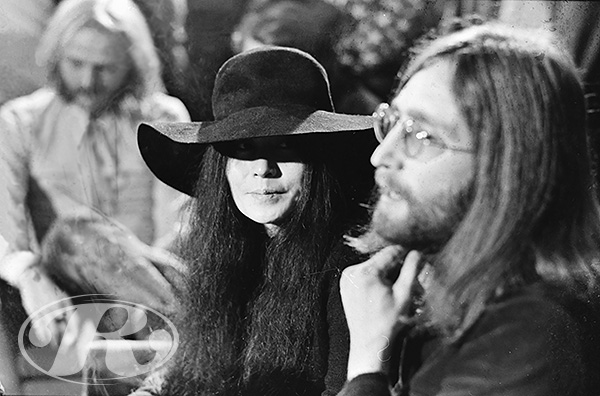
ON THIS DAY IN 1969, JOHN LENNON AND THE PLASTIC ONO BAND RELAXED IN TORONTO AFTER MAKING THEIR DEBUT AT THE TORONTO ROCK AND ROLL REVIVAL FESTIVAL THE DAY BEFORE

The gig itself nearly never went ahead after difficulties assembling the musical giants of the group like Eric Clapton and Lennon himself. Ritchie Yorke joked in his book that he was responsible for the breakup of The Beatles by encouraging and eventually convincing John and Yoko to show up and play in Toronto. As Lennon arrived at the airport in Britain, he was quoted as saying “I’m going to Toronto to play in a great rock and roll show with all the greats, and it’s the first gig for The Plastic Ono Band”.

The debut performance of The Plastic Ono Band was the surprise headliner of the Toronto Rock and Roll Revival festival, a one day, 12 hour gig organised by famed Canadian promoters John Brower and Kenny Walker, with Ritchie’s help. Also in attendance were Alice Cooper, Bo Diddley, Chuck Berry, Jerry Lee Lewis, Little Richard and The Doors, amongst others. This came at a very reasonable $6, bringing forth an audience of over 20,000. Interestingly, this performance also spawned the popular audience reaction of lighting matches and lighters and waving, created by famed record producer, and the Plastic Ono Band’s introducer, Kim Fowley as a means to ease Lennon’s nervousness.

CHRIST YOU KNOW IT AIN’T EASY
JOHN AND YOKO’S BATTLE FOR PEACE

Printed & Ebook Available here

John and Yoko Lennon, the self-styled peace propagandists of the pop-rock set, have been in Toronto to launch their campaign of ‘peace persuasions’.

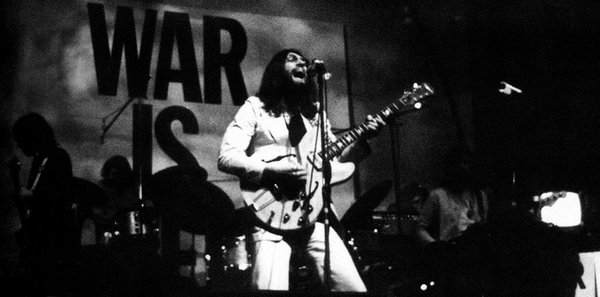
After their well publicized ‘bed in for peace’ in Montreal, earlier this year, they now plan to market their slogan ‘War is Over! If you want it.’

In the best Madison Avenue advertising tradition, John and Yoko will proclaim the advantages of their product via billboards, handbills, posters and all the mass news media. As John told his admirers last June, ‘plug peace — it‘s merchandise. You’ve got to outsell the businessmen . . . Make people aware there is an alternative to war.’ It all sounds very charming. John and Yoko will undoubtedly offer multi renditions of their ’give peace a chance’ song, wear and send an extravagant array of flowers and be interviewed over and over again.

Unfortunately peace or love or even hate, for that matter are not ‘products’ which can be adequately dealt with by the same techniques which work so well in selling soap.

Propaganda and mass advertising destroy social institutions and replace them with economic institutions which are incapable of giving expression to the ideal of public or personal peace.

The Lennon campaign has nothing to do with peace; it has only to do with the pursuit of fads and inception. Their campaign contributes nothing to the peace which we ostensibly celebrate each December 25.

CHRIST YOU KNOW IT AIN’T EASY
JOHN AND YOKO’S BATTLE FOR PEACE

Printed & Ebook Available here

OTTAWA — Pierre Elliott Trudeau is one of the beautiful people.

The word comes from Beatle John Lennon and his wife, Yoko Ono, who spent almost an hour with the prime minister Tuesday in his Centre Block office on Parliament Hill.

They came to talk peace, but according to Lennon, they talked generalities.

“He was more beautiful than we expected. We got great incentives from just meeting him,“ said Lennon’s Japanese wife.

“If all politicians were like Trudeau, there would be world peace. You don’t know how lucky you are in Canada,” interjected the bearded Beatle.

Lennon and his wife hurried to Ottawa overnight Monday from Toronto when the prime minister conceded he had some time for them in his Tuesday schedule. Apparently they had time to spare also from organization of a peace festival they plan to hold at Mosport in July.

Prime Minister Trudeau didn’t get a personal invitation to the festival, Lennon confided.

The couple entered the prime minister’s office still dressed in long black cloaks. Lennon’s hair streamed behind him as he and his wife strode rapidly through the halls of the Parliament buildings.

They were met by a prime minister also dressed in black, but his suit was made of corduroy—very mod.

The couple also met Health and Welfare Minister John Munro before leaving  the capital.

“Why the health minister?” they were asked.

“To keep the festival healthy, man,” replied Lennon.

Only one reporter was allowed to enter the prime minister’s chamber with the visitors. They posed for pictures, one with the prime minister’s arm around Yoko’s shoulder one with Lennon and Yoko with their arms around each other.

It was a symphony in black, said the server.

Is black a color of peace?

“No,” said Mrs. Lennon. “It’s practical like black or white, but black is warm winter.”

CHRIST YOU KNOW IT AIN’T EASY
JOHN AND YOKO’S BATTLE FOR PEACE

Printed & Ebook Available here

ON THIS DAY IN 1969, JOHN LENNON RECORDED ONE OF HIS BEST KNOWN SOLO SINGLES, “COLD TURKEY”

The song was Lennon’s second solo effort, following “Give Peace a Chance”, and it’s dark lyrical content was considered a departure from the usually cheerful music of The Beatles. “Cold Turkey” was, unsurprisingly, about Lennon and Ono’s attempts to quit their brief heroin habits, which apparently brought on a creative outburst from Lennon. There is another rumour as to the songs origin however. Apparently, it may have been inspired by a bout of food poisoning suffered by John and Yoko after eating Christmas leftovers, primarily cold turkey.

“Cold Turkey” was written and rehearsed all afternoon and then recorded in the evening, with the help of Ringo Starr. It did not publicly appear however until it was performed with the Plastic Ono Band at the Live Peace in Toronto event in September, which was recorded and later released as Live Peace in Toronto 1969. The song was initially barred from BBC and reviewed negatively amongst critics, however they soon changed their tune as the song quickly made the UK top 20 and US top 30. As the song began to dip in the charts, Lennon returned his MBE, stating “I am returning this MBE in protest against Britain’s involvement in the Nigeria-Biafra thing, against our support of America in Vietnam, and against Cold Turkey slipping down the charts. With love, John Lennon of Bag.”

Today, the song is well recognised as one of Lennon’s best and most popular solo songs in his immense catalogue. It has since been covered by numerous artists, including Lenny Kravitz and Alice Cooper and is in lists for the Greatest Guitar Tracks of All Time.

CHRIST YOU KNOW IT AIN’T EASY
JOHN AND YOKO’S BATTLE FOR PEACE

Printed & Ebook Available here

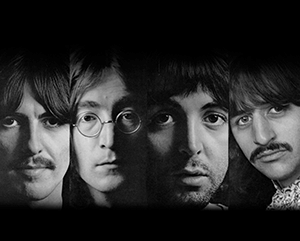
ON THIS DAY IN 1969, ALL FOUR MEMBERS OF THE BEATLES MET UP AT EMI STUDIOS FOR THE LAST TIME

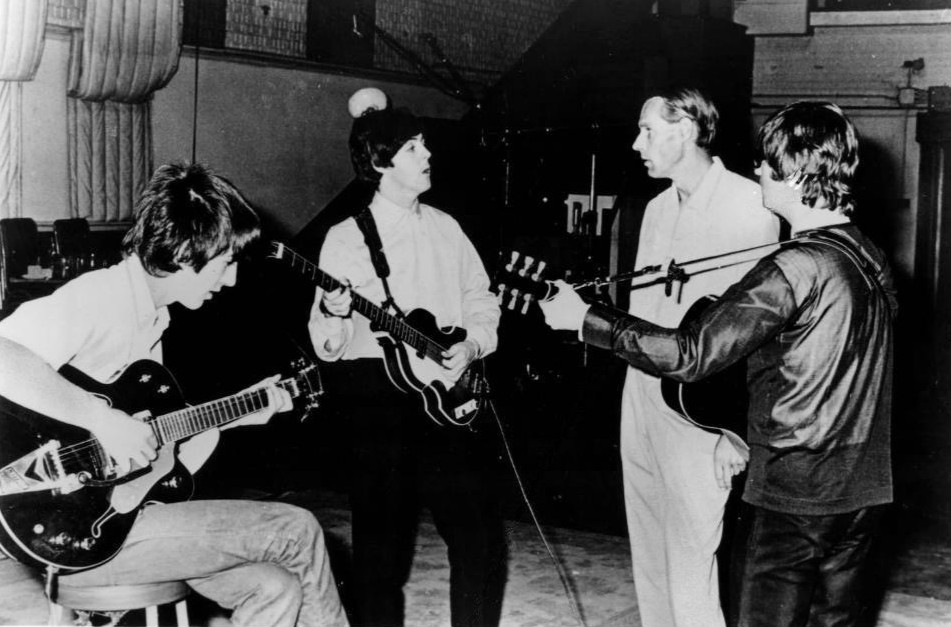
The band at the time had some internal animosity and no actual music was recorded on the day. They did however work on the mixing for “I Want You (She’s So Heavy)” for their Abbey Road album.

The group also worked on the sequencing for the album, deciding to change the ordering of the tracks and reverse the sides before the final master was set 5 days later.

The Beatles did meet at Abbey Road again, but with a vacationing Lennon not joining them or appearing on the song. Within a year of this final Abbey Road meeting, the final touches would be put on the last-ever Beatles session.

CHRIST YOU KNOW IT AIN’T EASY
JOHN AND YOKO’S BATTLE FOR PEACE

Printed & Ebook Available here

At the War Is Over Peace press conference in the Ontario Science Centre in December 1969, John and Yoko answered questions from more than 100 media members.

They were assisted by two Canadians who were described by John as “the John and Yoko of Canada.’’  One was concert promoter John Brower, the other (pictured here) was journalist/broadcaster Ritchie Yorke.

CHRIST YOU KNOW IT AIN’T EASY
JOHN AND YOKO’S BATTLE FOR PEACE

Printed & Ebook Available here

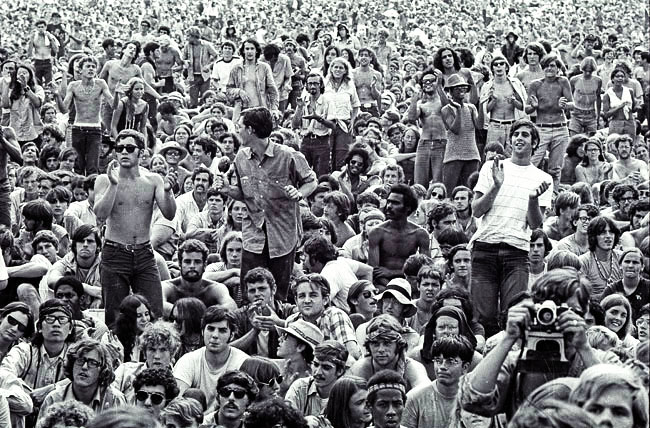
ON THIS DAY IN 1969, ONE OF THE MOST ICONIC MUSIC FESTIVAL IN ROCK HISTORY BEGAN WHEN WOODSTOCK KICKED OFF

Attracting an audience of over 400,000, the festival was the biggest ever held at the time and became a symbol for the hippy counterculture movement.

Planning the festival was an extensive process and at least two other venues were selected and then cancelled due to public outcry. The venue crisis was solved when a dairy farmer named Max Yasgur held the event on his property. This change occurred only three days before the event, which didn’t give organisers enough time to sort out security and ticketing booths and so a decision was made to make the festival free. This nearly left the organisers and promoters bankrupt, until the soundtrack and documentary film released in 1970 helped recuperate the losses.

Some of the biggest names in rock played at Woodstock, giving it it’s legendary status. Bands like Canned Heat, Jefferson Airplane, The Who, The Band and The Grateful Dead ensured great entertainment and big numbers for the festival. The event has since been called a pivotal moment in rock history as well as a definitive nexus for the upcoming counterculture generation.

CHRIST YOU KNOW IT AIN’T EASY
JOHN AND YOKO’S BATTLE FOR PEACE

Printed & Ebook Available here