Go-Set – Saturday, June 5, 1971

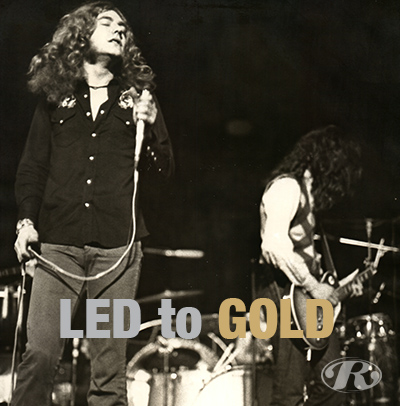
America’s many pushers of softer rock music are currently proclaiming the end of Led Zeppelin, and other dynamite-powered sock-rock acts such as Grand Funk Railroad, Bloodrock and Gypsy.

These anti-hard rock critics are pointing to the success of James Taylor (with a lone single and album Elton John, Cat Stevens and others, as evidence that gutsy rock is about to sink.

It s true that U.S. top 40 stations have recently begun to sound like middle-of-the- road (or adult) stations, but this is really no indication that hard rock is on the wane. Singles account for a mere 10% of the U.S. total sales on records, and the fact that top 40 stations are not too keen to program tough sounds like Led Zeppelin is really no indication of anything, other than the widening credibility gap between the top 40 programmer and his youth audience.

Ever since Led Zeppelin first blasted their way into North American music in early 1969, the critics have done their best to damn the English foursome. Their records are seldom reviewed by the prominent rock papers, and when they are reviewed, it is with caustic and demeaning phraseology. Despite sales in excess of 2-million copies on each of their three albums which is a record in itself — no group other than the Beatles has been able to stack up such huge sales figures in the U.S. — despite half-a-dozen SRO, attendance breaking tours, and despite what is undoubtedly the finest stage show in contemporary rock, the American media has done all it can to ignore Led Zeppelin.

This is especially true of the revered news magazines such as Time and Newsweek – whose atrocious coverage of the rock scene raises some serious doubts about the rest of their reporting on hard news. Time recently accorded James Taylor (or) more significantly the Taylor family) a front cover story.

Two years ago, the Band were given similar treatment. Yet neither (nor both combined) act has ever come close to approximating the tremendous success of Led Zeppelin.

The trouble with Led Zeppelin — at least as far as the media is concerned — is that the group plays very loud music with all the emphasis the Band so clearly lacked. There never was a louder, harder, or tougher group than Led Zeppelin, and to the grey-haired ears of the news magazine’s music critics, it was like water running off a duck’s back.

Nevertheless, Led Zeppelin has worn its popularity well. Guitarist Jimmy Page, bass player John Paul Jones, drummer “Bonzo” Bonham and singer Robert Plant are four of the straightest and nicest guys in rock. There are no pretensions, no hype, no special show for the group’s few media friends.

Being with Led Zeppelin is like being with four of your friends. You just talk about whatever comes naturally. 

Led Zeppelin were the forerunners of the word-of-mouth rock promotion route. The group’s first album. Led Zeppelin, sold its two million plus with no hit single and very little airplay. The reason for this was that the kids knew about Led Zeppelin without reading the rock journals or listening to the radio.

On the first U.S. tour (in February-March 1969) Led Zeppelin played every place that would have them – sometimes for as little as $750 a night. That is miniscule compared with the group’s current asking price of around $50,000 per performance.

Jimmy Page once told me that the purpose of Led Zeppelin was to simply play some good music and do a couple of American tours for expenses and a few hundred dollars bonus. There were never any grand plans of conquering the world, at least in the eyes of the band members.

The manager Peter Grant there was a different purpose. A giant of a man physically (he weighs around 300 pounds), Grant is no mental midget. Grant looked at the then current rock scene, noted that Cream was curdling and Jimi Hendrix was more hung up than a hammock, and saw that there were no real exponents of hard rock on the horizon.

Grant knew as well as anyone that the hard core rock audience is not interested in folk-oriented artists or C and W singers — what it wants is high energy rock. Led Zeppelin simply, and possible accidentally, slipped into the vacuum left by the departure of Cream and Hendrix.

The second tour cemented Led Zeppelin’s small but ardent following, and the second album brought about top 40 airplay on the group. A single from the album, Led Zeppelin II, sold a million copies. It was, of course, “Whole Lotta Love.”

By the time, “Whole Lotta Love” had reached its peak, Led Zeppelin were as well established in North America as motherhood or apple pie. And their fame had spread internationally — they quickly became the top groups in such places as Japan, Australia and Sweden. Gold records flowed in from all over the world.

The publishing royalties alone were worth millions. Manager Peter Grant once told me that Led Zeppelin’s major source of revenue was publishing. “There are no expenses,” he explained, “you just have a girl in an office to answer the phone and the money rolls in.”

This really means something when you consider that Led Zeppelin has received more than a million dollars from the Atlantic label on record royalties alone.

Such huge sums often bring complacency to rock stars. But not Led Zeppelin.

In its third album, the group attempted to change its image a shade. The hard rock numbers still went down, but there were also a couple of softer tracks — as if to show the critics that Led Zeppelin wasn’t all Marshall amplifiers and air splitting energy.

Led Zeppelin III also produced another million-selling hit single, “The Immigrant Song.”

Led Zeppelin — without Time or Newsweek or even Rolling Stone — have left a tidewater mark on the world of rock which no future tidal wave can ever wash away. They have demonstrated that the media is rapidly losing touch with what turns on the kids, and they have shown that hard rock will always have a place in the core of contemporary music.

The group is currently working on its fourth album for summer release, and getting ready for yet another U.S. tour. There are also plans for a world tour, which would take in Europe, Japan and Australia.

The people who have long hoped that Led Zeppelin would just die or fade away have a lot more waiting to do. Far from being burst, the Led Zeppelin bubble may be only just beginning, at least on the global scene. And that, according to Marshall McLuhan, is where it really matters.
CHRIST YOU KNOW IT AIN’T EASY
JOHN AND YOKO’S BATTLE FOR PEACE

Printed & Ebook Available here

SOMETHING

A tribute from King Curtis is no insignificant gesture. He is widely regarded as the pop world’s No. 1 tenor sax man.

He has played on each of the historic, sales-spiralling recording sessions of Aretha Franklin, and it was he who arranged, and blew sax, on Aretha’s classic version of Respect.

King is appearing at the Coq D’Or for two weeks, taking a strong claim as the foremost blues bandleader on the circuit today.

On uptempo numbers, he would make a touch-typist envious as he punches on the saxophone keys with amazing speed and dexterity.

He holds a blue note for so long that one begins to wonder if he has an auxiliary air tank hidden away on his bulky frame. He plays with unquestionable enthusiasm, dynamic drive, and sensitive persuasion.

VERSATILE

He’s equally at home with ballad or beat. It might have been freezing outside, but inside there was a heat wave going on.

The act’s eight-minute version of Ode To Billy Joe may yet bring the poor boy back to life. King’s rendition of I Was Made to Love Her is even more compelling, carrying a Cassius Clay-class punch.

Memphis Soul Stew, a recent hit for the combo, came off like home made apple pie. The clincher was Soul Serenade, a tortuous yet tender ballad, which Curtis blew through on his saxello with almost naive sensitivity.

Toronto is obviously hip to the Curtis message; the club was packed with people of all ages, the over 30’s predominating.

PISTON

Curtis and the Kingpins are as tight as a hot rod piston, with comparable power. The group comprises Jimmy Smith on electric piano, Mervyn Bronson on bass, Al Thompson on drums, and Stirling McGee on guitar, all first- class sidemen.

Curtis also introduced a young female vocalist, one Ruby Michelle, who contributed more than adequate workouts on current contemporary favorites like Chain of Fools.

The music is down to earth. The group is the equal of anything, anywhere. Curtis is King for those who like good music well played.
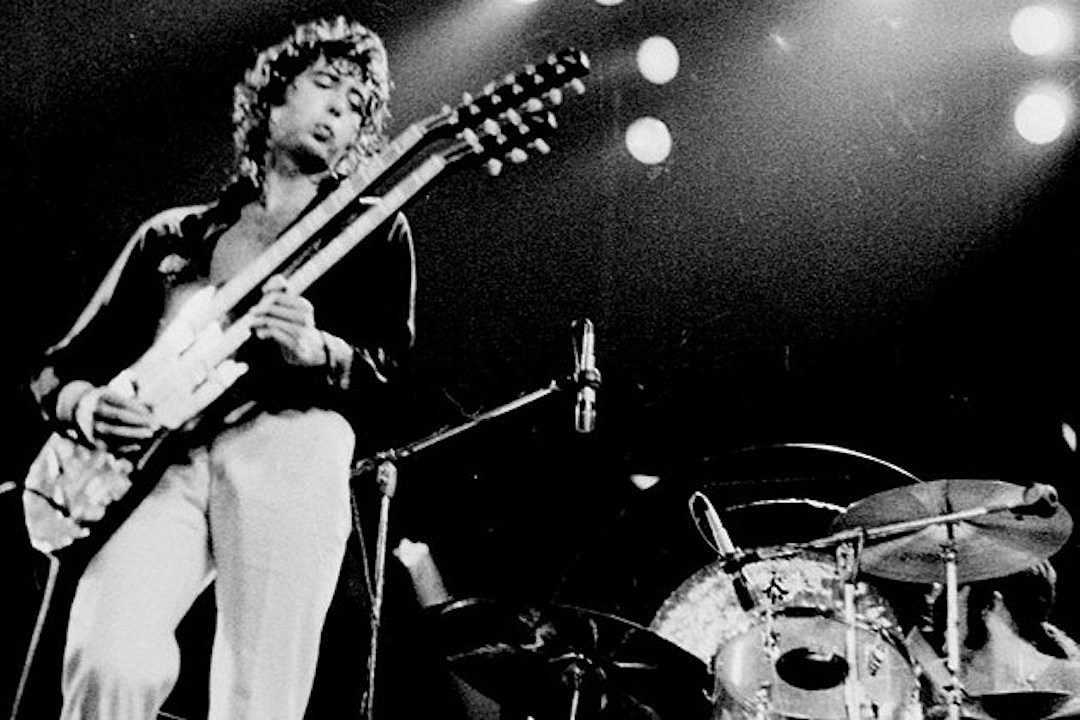
ON THIS DAY IN 1970, THE MEMBERS OF LED ZEPPELIN PERFORMED UNDER A DIFFERENT NAME

The name Led Zeppelin was based around the famed Zeppelin airship, designed by Count Ferdinand Adolf Heinrich August Graf von Zeppelin. His granddaughter, Countess Frau Eva von Zeppelin took insult to the name and felt that it dishonoured her family. They first noticed the Countess when she unsuccessfully attempted to have a television appearance cancelled, calling the band “shrieking monkeys”. She then threatened with lawsuits.

The band themselves were actually fairly amicable about the situation, inviting the Countess for a cup of tea at a television studio. By all accounts this meeting went well and the issue was resolved until the Countess glimpsed a cover for the groups debut album, featuring a picture of the Hindenberg airship combusting into flames and could not be calmed, even with offers of an all-areas backstage pass and, reportedly, free drugs.

It was at this point that notorious manager Peter Grant decided to temporarily change the bands name to The Nobs for several shows over their Scandinavian tour. The band apparently found this absurd but performed without complaint.

LED ZEPPELIN
LED to GOLD

Printed & Ebook Available here

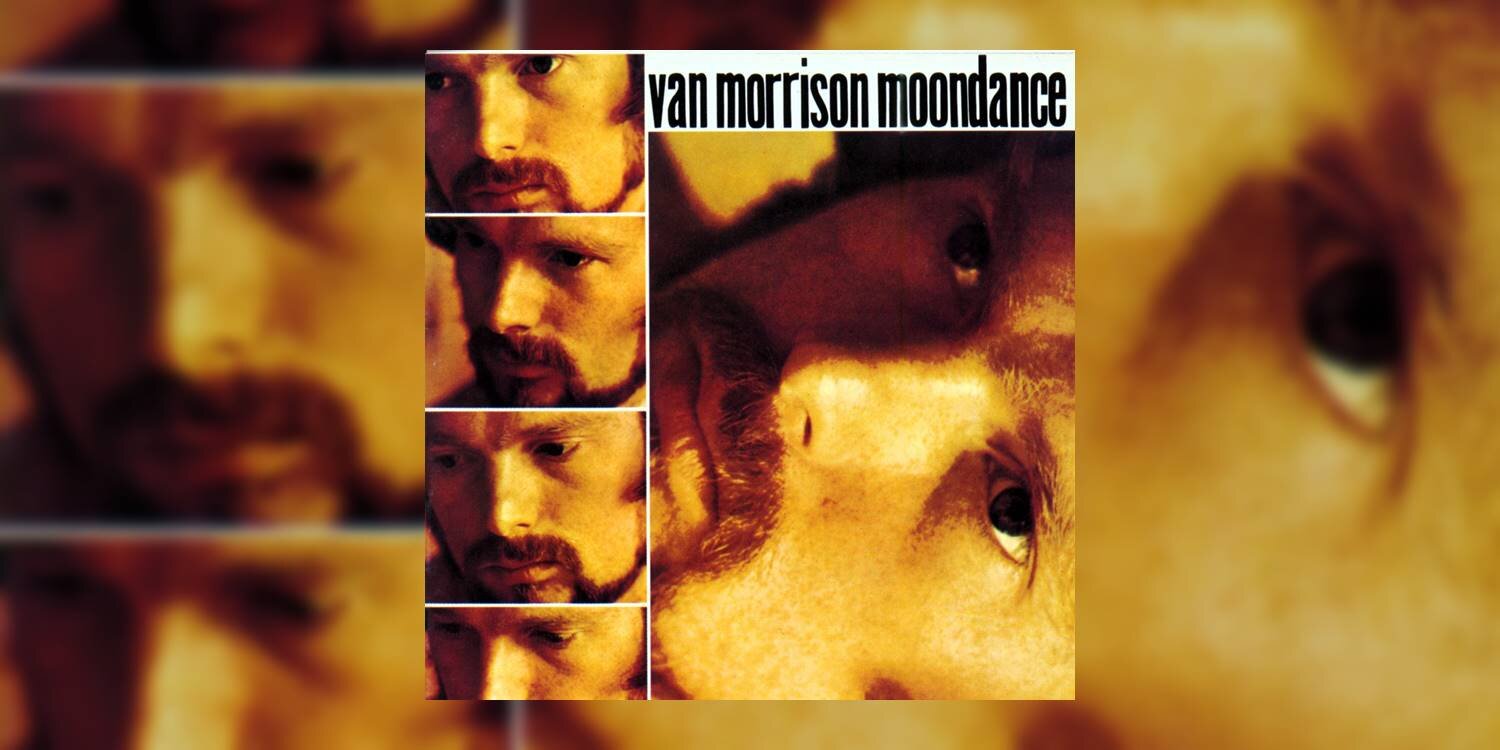
On this day in 1970, Van Morrison is awarded a Gold record with his album, Moondance

Van Morrison released his third studio album on the 27th of January 1970. After the perceived commercial failure of Astral Weeks, Morrison moved to New York to write and find musicians for Moondance.

The album saw Morrison abandoning the abstract folk-jazz style of his previous album in order to create more formally composed songs in a rhythm and blues/ rock style. The music also incorporated elements of soul, jazz, pop and Irish folk with lyrical content about finding spiritual redemption in nature, music, love and self-affirmation.

Moondance was released to immediate success, both critically and commercially with several songs becoming radio staples in the early 1970’s. The album made a slow climb to Gold in November of 1970 and eventually 3x Platinum. It is now considered one of Morrisons best albums and one of the best albums of all time, making numerous lists and being entered into the Hall of Fame in 1999.

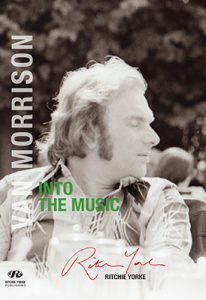
VAN MORRISON

INTO THE MUSIC

Printed & Ebook Available here

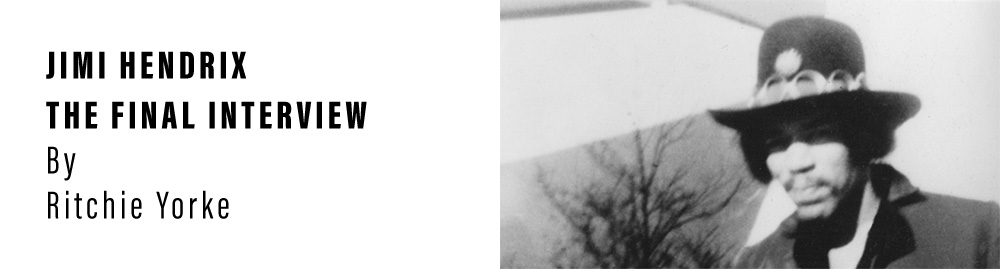
JIMI HENDRIX
THE FINAL INTERVIEW

It was the late afternoon of one of those dog days of late summer in Toronto – hot, humid and oppressive. Hardly any indications of the bitter winter winds and icy storms which would splatter regularly upon this lakeside metropolis in just a few weeks to come.

The interview was a last-minute affair, as superstar interviews tended to be in that ancient era of music promotion. The idea had been bandied around for weeks after I’d scored valuable points with the Hendrix organization for my coverage of Jimi’s drug bust at Toronto Airport for Rolling Stone magazine.

Then out of the blue, his lawyer’s secretary phoned from New York to see if I’d be available to talk to Mr Hendrix later that day. One was not to know, of course, that this would be the great musician’s final interview before he flew to London and that destiny which awaited him post the Isle of Wight festival.

Nonetheless your youthful and respectful reporter approached the task with a degree of trepidation, knowing Jimi’s intolerance for ignorance or undue assumption.

The results were revealing in many ways that I was not to comprehend until later. In some aspects, not until much later.

The guitar master was in notably good humour and appeared willing to talk about anything I cared to mention during our discussion. No matter where the flow meandered in the wide-ranging interview, it didn’t appear to phase him.

He said that he’d been spending his time “thinking, daydreaming, making love, being loved, making music and digging every single sunset.” It all sounded almost too idyllic to be true against a background of increasing street violence.

Jimi had clearly been giving more than passing consideration to the exalted position he had so rapidly assumed in the pantheon of rock. And the inevitable injustice of living with being one of the lucky ones, while so many others struggled.

“I feel guilty when people say I’m the greatest guitarist on the scene. What’s good or bad doesn’t matter to me – what does matter is feeling and not feeling. If only people would take more of a true view and think in terms of feeling. Your name doesn’t mean a damn : it’s your talent and feeling that matters. You’ve got to know much more than just the technicalities of notes : you’ve got to know sounds and what goes between the notes.”

Jimi made it abundantly clear that he was fed up with public expectations of him, but appeared to have transcended the issue. “I don’t try to live up to anything anymore,” he said, obviously buzzed by his newfound freedom. “I was always trying to run away from it. When you first make it, the demands on you are very great. For some people, they are just too heavy. You can just sit back – fat and satisfied Everyone has that tendency and you’ve got to go through a lot of changes to come out of it.

“Really man,” he continued, ” I’m just an actor… the only difference between me and those cats in Hollywood is that I write my own script.

“I consider myself first and foremost a musician. My initial success was a step in the right direction, but it was only a step, just a change. It was only a part of the whole thing – now I plan to get into many other things.”

The clash between body and beat was bound to come in Jimi’s colourful and erotic career. The classic Hendrix we first saw – all unforgettably dashing and devastating and sizzlingly defiant – was an image makers’ dream. The uncompromising way in which he performed, it looked as though every twitch of the bushy eyebrows, every thrust of the velvet-panted knee, every shake of the tousled frizz, had been meticulously formulated by a motley crew of assorted PR and promotion types, under the collective influence of a super fine batch of acid.

His concert persona, with the biting of the guitar strings and the complete overshadowing of all but Presley in what had gone before on the rock pile, was as precise and as phallicly-stimulating as a missile countdown. He whipped the audience into an absolute frenzy and left them as limp as a fading rose on a boiling summer’s noon.

There at least two personas of Hendrix – the electrifying live performer and the studio genius. They didn’t necessarily have to inter-relate. “When it all comes down to it, albums are nothing but personal diaries,” he insisted

“When you hear somebody making music, they are actually baring a naked part of their soul to you.

“Are You Experienced? was one of the most direct albums we’ve done. What it was saying was ‘let us through the wall man, we want you to dig this.’ But Ikater when we got into other things, people couldn’t understand the changes. The trouble is that I’m a schizophrenic in at least 12 different ways and people can’t get to it.

“Sure each album comes out (sounding) different, but you can’t keep on doing the same thing. Everyday you find out this and that and it adds to the total (mental) picture you have. Are You Experienced? is where my head was at a couple of years ago. Now I’m into different things.”

One of those things which concerns him most acutely is the relationship between the earth and sun and mankind. “There’s a great need for harmony between man and earth. I think we’re really screwing up that harmony, by dumping garbage in the sea and air pollution and all that stuff. The sun is very important – it’s what keeps everything alive.”

It is no coincidence that Jimi’s final studio endeavour has just been released under the title of First Rays of the New Rising Sun. It was the album he was completing when he died He talked about it briefly during our conversation.

“All I know is that I’m working on my next album. We have about 40 songs in the works, about half of them completed. A lot of it comprises jams – all spiritual stuff, very earthy.”

Scoffing at prevailing rumours that he had been contemplating taking a year off, Jimi did cast light on an immediate ambition, a big trip in its own right.

” I’m gonna go to Memphis,” he declared in a curious tone. “I had a vision and it told me to go to Memphis and meet my maker. I’m always having visions of things and I know that it’s building up to something really major.

“I think (organized) religion is just a bunch of crap. It’s only man-made stuff, man trying to be what he can’t. And there are so many broken down variations All trying to push the same thing, but they’re so cheeky – all the time adding in their own bits and pieces. Right now I’m working on my own religion which is life.

“People say I’m this and I’m that but I’m not. I’m just trying to push the natural arts – rhythm, dancing, music. Getting all that together is my thing.”

Jimi wasn’t too impressed with the state of pop music circa 1970. ” I think too many musicians are getting on bandwagons,” he retorted. “Now is the time to do your own thing You know man, sometimes I can’t stand to hear myself because it sounds like everyone else I don’t wanna be in that rat race !

“What I particularly don’t like is this business of trying to classify people. Leave us alone. Critics really give me a pain in the neck. It’s like shooting at a flying saucer without giving its occupants a chance to identify themselves. You don’t need labels man, just dig (the broad spectrum of) what’s happening.’’

I suggested to Jimi that during the course of our 45-minute interview, he seemed a lot happier and more relaxed than he’d been in earlier conversations. “Yeah man, and I’m getting more happy all the time,” he confided “I see myself getting through all the drastic changes, getting into better things.

“I like to consider myself timeless. After all, it’s not how long you’ve been around or how old you are that matters : it’s how many miles you’ve travelled. A couple of years ago. all I wanted was to be heard. “Let me in’ was my big thing Now man, I’m trying to figure out the wisest way to be heard.”

CHRIST YOU KNOW IT AIN’T EASY
JOHN AND YOKO’S BATTLE FOR PEACE

Printed & Ebook Available here

On this day in 1970, a huge anti-war rock festival was held at Shea Stadium in New York

Billed as the Festival for Peace, it was the second in a series of events with the purpose of raising funds for anti-war political candidates. The first, the Winter Festival for Peace was held earlier in the year.

The date selected was of interest as it marked the 25th anniversary of the U.S. first use of an atomic weapon in the bombing of Hiroshima. Due to the festivals fundraising purposes, many of the artists billed to perform donated their time and performances for the cause.

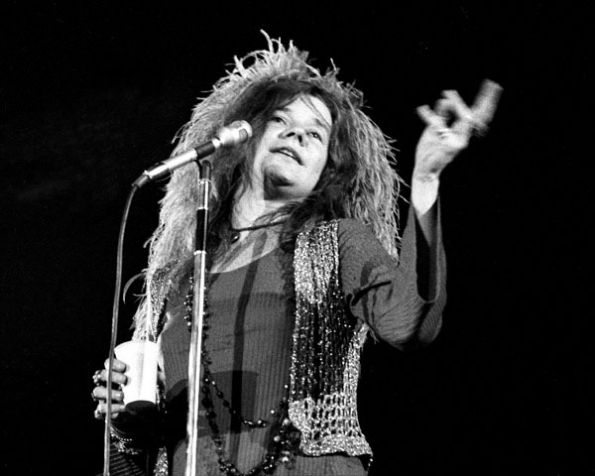
Along the musicians to play were Paul Simon, Creedence Clearwater Revival, Steppenwolf, Miles Davis, Herbie Hancock and Janis Joplin. The Festival for Peace would soon be immortalised as one of Joplin’s last performances, as well as a reunion and last performance with her former band, Big Brother & the Holding Company.

CHRIST YOU KNOW IT AIN’T EASY
JOHN AND YOKO’S BATTLE FOR PEACE

Printed & Ebook Available here

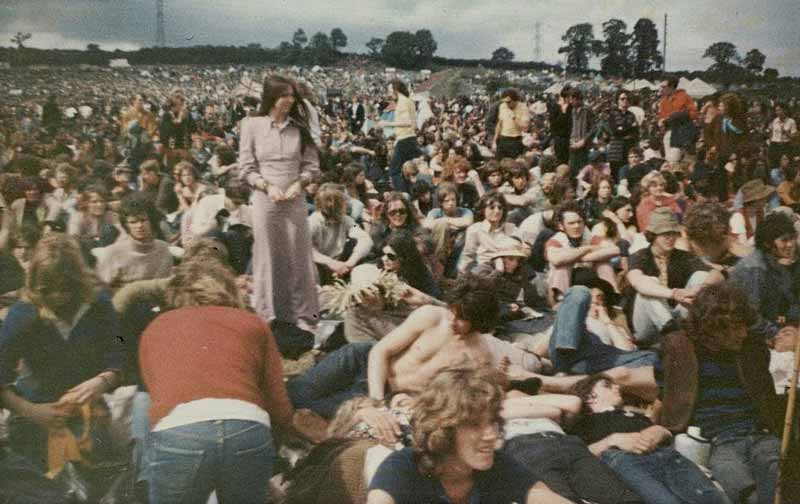
ON THIS DAY IN 1970, LED ZEPPELIN PERFORMED AMONGST OTHERS AT THE BATH FESTIVAL OF BLUES AND PROGRESSIVE MUSIC

Organised by Freddy Bannister and wife Wendy, this festival was an escalation of a smaller blues festival held the year before.

Joining Led Zeppelin was an immense lineup, featuring greats like Pink Floyd, Jefferson Airplane, Frank Zappa, Santana and The Moody Blues. Meanwhile, an alternative festival was held in an adjacent field where bands like the Pink Fairies, Genesis and Hawkwind played on the back of a flatbed truck. Unfortunately, wet wether caused Jefferson Airplanes set to be aborted partway and The Moody Blues set to be cancelled.

Nonetheless, a significant crowd of approximately 150,000 fans showed up for the festival, causing numerous logistical difficulties for organisers and security staff. A problem with stolen receipts also led to a largely decreased profit. This may be why the festival was not repeated, although it reportedly inspired Michael Eavis to plan and hold the first event of what would later transform into the Glastonbury Festival of Contemporary Performing Arts.

LED ZEPPELIN
LED to GOLD

Printed & Ebook Available here

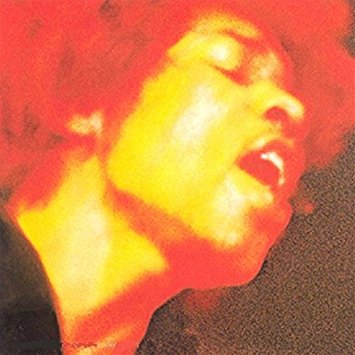
ON THIS DAY IN 1970, JIMI HENDRIX RECORDED AT HIS NEWLY BUILT ELECTRIC LADY STUDIO IN NEW YORK FOR THE VERY FIRST TIME

The studio is widely known, largely thanks Hendrix’s final studio album, after which the facility is named. The studio was born after Hendrix and his manager Michael Jeffery purchased a newly defunct nightclub on 8th Street in Greenwich Village, New York, a venue that had played host to the legendary guitarist a number of times for impromptu shows and jam sessions. The duo’s original plan was to continue the live venue model of the club but advisors and friends convinced Hendrix to instead convert it into a professional recording studio, as the studio fees for the Electric Ladyland album were skyrocketing. From there, famed architect and acoustician John Storyk was brought in to manage all the structural details and from there Electric Lady studio, and the only artist-owned studio of the time, was born.

Construction of the studios took double the amount of time and money originally allocated, and had to be saved by a significant loan from the Warner-Brothers company. After it’s completion, Hendrix was tragically only able to record there for four weeks before his untimely death at age 27.  Since then Electric Lady has played host to a number of legendary recording artists including John Lennon, Bob Dylan, David Bowie, Erykah Badu, Stevie Wonder and Led Zeppelin, as well as more modern artists like Kanye West, Frank Ocean, Lana Del Rey and Mark Ronson, who gave a tour of the studio last year.

Though the studio wasn’t opened until August 26th, today marks the anniversary of the first time Hendrix was able to record at his new studio alongside friends Steve Winwood and Chris Wood from Traffic. The group worked on a number of classic Hendrix and Traffic songs which were later included on various studio albums, including Hendrix’s classic final studio contribution, Electric Ladyland.

LED ZEPPELIN
LED to GOLD

Printed & Ebook Available here

[Wed, Arp. 15, 1970]

Ottawa Journal

OTTAWA – Not since the glorious, glamorous, heyday of the Beatles had there been anything like it.

An opening night audience of 19,000 people in Vancouver, surpassing the Beatles’ house record by more than 2,000. In Los Angeles, more than 20,000 fans, and a cheque for $71,000, topping Cream’s one-night record fee of $70,000 at Madison Square Garden.

DISADVANTAGE


In Montreal the night before last, a crowd of almost 18,000 – smashing the house record. And then last night, amidst exams and Ottawa’s traditionally small turnouts on weekdays about 8,000 crammed into the civic centre.


Who was causing all the fuss? Who else but Led Zeppelin, steamrollling its way across North America on its fifth tour in 18 months. This jaunt will earn the group in excess of $1.2 million for 26 concerts.


Toronto missed out this tour, and it was our loss. But to be fair, Toronto has seen the Zepp three times previously, while Vancouver, Montreal and Ottawa missed out.


The Ottawa gig was not the best the group has ever done, but they were at considerable psychological disadvantage in playing a massive stark concrete arena such as the civic centre. It may be the ideal spot for a hockey game, but it was too artistically cold for a musical event such as this.


Billed as an evening with Led Zeppelin, the concert was just that. There were no supporting acts, no intermission. Just two solid hours of smashing, splattering rock music. The sound ripped out of six massive speakers, infiltrating anything which stood, sat or lay in its way.


The repertoire was almost all well-know, which added to the impact. Culled from both the Led Zeppelin albums, it was delivered with style because of the sheer waves of volume with finesse.

POTENT


Of course, there is nothing wrong with volume in rock. Contrary to what most critics claim, volume is used in rock not to cover up lack of expertise but to add sting to the message.


In this area, there has never been a more potent group than Led Zeppelin. Perhaps this is why no other group since the Beatles, or before for that matter, has been able to generate the sort of excitement and energy which Led Zeppelin is offering right now.


Backstage, after the show, it resembled the winners’ dressing room after a Grey Cup final. There were TV cameras and radio microphones, autograph hunters thrusting forth posters and hot dog wrappers, and businessmen tossing in business cards.


Amidst the chaos, I managed to learn from Jimmy Page that a third Led Zeppelin album to be called Zeppelin III, will be released in July.


“It will have more variety than the other two albums,” Page said, “and there’ll be more emphasis on acoustic guitar.”


Robert Plant cut in, through the clatter, “and there’ll be some nice vocal harmony things.”


Then the group got into the limousines and headed back to the Queen Elizabeth Hotel in Montreal, where they are occupying the same suite used by John and Yoko.

CHRIST YOU KNOW IT AIN’T EASY
JOHN AND YOKO’S BATTLE FOR PEACE

Printed & Ebook Available here

ON THIS DAY IN 1970, LED ZEPPELIN POWERED THROUGH ONE OF THEIR SPECTACULAR SHOWS OF THEIR FOURTH NORTH AMERICAN TOUR

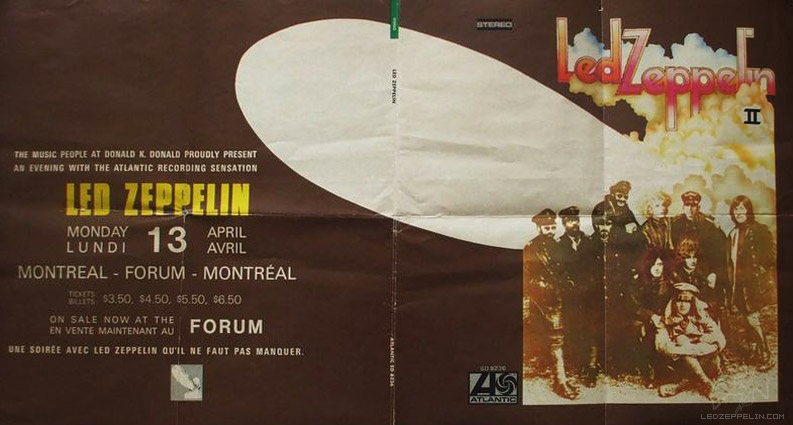
This show however, was located in Montreal, Canada. The concert was momentous as it marked the first occasion that the venue, the Montreal Forum had been sold out by any act in it’s long history. The group had set a new attendance record, with over 17,500 excited fans awaiting the band, and the event grossed a staggering $93,000. The shows attendance smashed the previous record set by The Beatles, despite receiving mixed reviews.

A number of the critics that attended the show reviewed it poorly, though the show took place during the bands infancy when bad reviews were still somewhat common. Ritchie Yorke was able to attend the next stop on their tour in Ottawa and in his review, he states that it was far from their best show, but largely due to their venue choices of a stark concrete arena, designed to be used for hockey games. Ritchie goes on to say, however, that the bands high volume and finesse make them a potent group, and the most exciting since The Beatles. Ritchie’s original review of that show, which includes a quick conversation with Jimmy Page, can be found here.

Unfortunately, not a great deal of media exists for this show. Other than the press reviews available online, there are no bootlegs of the set and few photographs and posters. This show was only the beginning for the band and their concerts in Canada, however, as they enjoyed a long history of sold-out shows in the area, including a set years later that would be recorded and made available.

LED ZEPPELIN
LED to GOLD

Printed & Ebook Available here

Continuing four-part series on Led Zeppelin, I turned to lead singer Robert Plant, who is regarded in some quarters as rock’s most provocative sex symbol since Jim Morrison (but wait till you hear what he has to say about that!).

RY: DID YOU EXPECT TO MEET WITH SUCH STAGGERING SUCCESS?

RP: Never! I don’t think anyone could expect that really. Not even Jimmy, and Jimmy already knew that American audiences were much more responsive to hard work. But none of us really expected this. Just band! And we really never knew how big we were.

You can’t really realize it until you come to each individual town that you have never been in before and people are running down the street banging on your car windows and all that. And when you get a fantastic reception the moment you walk on stage, you start to realize just what’s happening. I could never have dreamed of anything like this.

RY: WHAT WERE YOU DOING BEFORE LED ZEPPELIN WAS FORMED?

RP: I was working immediately before LZ with a group called Alexis Korner and we were in the process of recording an album with a pianist called Steve Miller, a very fluid thing – nothing definitely set up. We were going to do a few festivals in Germany and that sort of thing. Before that, I hadn’t dome much at all. I’d cut three singles which I prefer to forget. I want to leave them in the dimmest past!

John Bonhm and I worked together for a total of about 2 1/2 years. It was a period of trying to find what I wanted to do musically. You know, you go through the initial thing where you want to get up on stage and scream your head off, and the next minute you want to play blues and you finally find that everything is a means to an end to what you really want to do musically… once you’ve reached it.

So I feel my first four or five years were finding out what I wanted to do. You could either end up going completely into the pop field on a commercial trip, or just stick to what you liked musically.

RY: HAVE YOU NOW FOUND YOURE MUSICAL NICHE?

RP: I think I’m finding it. The first year of LZ has made me see a lot more of what I want to do. I think this year has been much more valuable to me than the other five because for the first five years nobody really wanted to accept what I was doing, even though we were doing a sort of Buffalo Springfield – Moby Grape sort of thing.

In England, nobody really wanted to know, they just said it was noise with no meaning; and to me, it was the only noise with meaning. The Springfield and the Grape really knew what they were doing.

LZ has given me a chance to express that in lyrics on the second album and when we do the third album I hope to get that thing even more to the point of what I’m trying to get into. Gradually, bit by bi, I’m finding myself now. It’s taken a long time, a lot of insecurity and nerves and the “I’m a failure” stuff. Everybody goes through it. Even Jimmy did, when he was with the Yardbirds, but now everything’s shaping up nicely.

RY: WHEN YOU STARTED THOUGH, EVERYONE IN NORTH AMERICA THOUGHT THIS WAS JIMMY PAGE’S BAND. THAT WAS THE IMPETUS WHICH LAUNCHED YOU HERE. IT MUST HAVE MEANT YOU ALL HAD A GREAT RESPONSIBILITY TO PROVE YOURSELVES INDIVUALLY, AS BOTH PEOPLE AND MUSICIANS.

RP: Yeah, but it was really good, because, well, obviously we owed a lot to Jimmy in the first place because, without him, we couldn’t have gone into the right places initially… Because people like Spooky Tooth have had such a hard time trying to get any sort of reputation in the States, and eventually all their inspiration goes.

Spooky Tooth came over here in the summer and did about seven gigs in as many weeks. It was very bad for the band.

With Jimmy’s reputation, we could go into the proper clubs, but had Jimmy been the only member of LZ who was any good at all, it would have been pointless. Fortunately each of us shone in our own little way, if that’s what you can call it, and the audiences said: “Wow, there’s Jimmy and he’s brilliant” and they look around and they take everybody else how they want to.

Obviously on the first tour, it was all Jimmy, Jimmy, Jimmy, which is fair enough because he deserved it, and then on the second tour people started taking an interest in the other members of the group and then with our stage act, well we’ve had some criticism of that.

The thing is that after a while you personally start going out on the stage and you can feel what’s going to happen. The moment you set foot on stage you can sort of let go, and the audience is like a piece of blotting paper and what makes it is what you give it, and you’ve gotta give it good.

Each of us has a different personality which comes to the fore. Like John, when he jumps into the air above his drums. Everybody now knows each member of the group for his musical ability and for himself, I think.

RY: ROBERT, YOU HAVE BEEN DESCRIED AS THE MOST IMPORTANT NEW SEX SYMBOL IN POP SINCE MORRISON. DOES THIS REALLY GET TO YOU? OR DO YOU TAKE IT LIGHTHEARTEDLY?

RP: Yeah, well, don’t you think it’s the end of you life once you take it seriously, that sex symbol thing. If any musician goes on stage feeling that; I mean, you can take in all that applause at face value and it can turn you into a bad person, really it can.

TERRIBLE HARM

All this sort of popularity can do you terrible harm and I treally thought that it would do once we started getting off. I though, “God, if this keeps going what the hell will happen to me?”

You can go right off your rocker and you can start to think – “Here I am and I’m the greatest singer in the world” and all that. But it’s not worth doing that because there’s always someone who can come along and will sing better than me and I fully realize that. So all you can be is honest and be yourself.

If there’s some nights when I don’t want to say anything to the audience then I don’t. But I don’t make it noticeable.

I don’t really know how people think about sex symbols. If they can see your pelvis then that must make you a sex symbol… because I’m the only one of us that doesn’t have a guitar or drums in the way of mine. I suppose I started with a bit more chance than anybody else in the band.

You can’t take it seriously simply because you read all these things about it. You just get into your music and the sexual bit isn’t an apparent thing. It’s not what we’re there for.

RY: YOUR STAGE ACT SEEMS TO BE GOING THROUGH SOME CHANGES, AS COMPARED WITH THE FIRST COUPLE OF TOURS.

RP: Yeah. I think that what we’re doing now is what each one of us wants to do. I think people expect us to be a lot more arrogant than we are. A lot of people say “Yeah well they’re alright but what about all that laughing and jumping around they do.”

There seems to be a label that goes with music that’s intense. People are expected to stand there looking as through they’re out of their minds. If ever I was to go out of my mind, I’m sure I wouldn’t just stand there like that – so it’s like a big play act and we mustn’t play otherwise we’ll run away with ourselves like Jim Morrison did.

RY: DO YOU THINK MORRISON TAKES HIMSELF TOO SERIOUSLY?

RP: Oh yeah. We only played with the Doors once in Seattle and it seemed like he was screwed up. He was giving the impression he was into really deep things like Skip Spence of Moby Grape. You can get into a trip of your own that you don’t really realise what’s going on in the outside world.

Morrison went on stage and said “Fuck you all” which didn’t really do anything except make a few girls scream. Then he hung on the side of the stage and nearly toppled into the audience and did all those things that I suppose were originally sexual things but as he got fatter and dirtier and more screwed up, they became bizarre.

So it was really sickening to watch. My wife and I were there watching and we couldn’t believe it. I respected the Door’s albums, even though they’re not brilliant musicians, and, as I said, that doesn’t matter. What Morrison was doing on record was good.

Over all our heads

The tracks “Cancel My Subscription To The Resurrection” was great, but now he doesn’t get into any of the things from the past, and the sexual thing has gone. He was just miles above everyone’s head. It seemed that he realized the Doors were on the way down.

He went on stage with that opinion and immediately started saying all those strange things which nobody could get into. There were one or two people there crying: “You’re God, you’re King,” and I was thinking, “Why?”

Then the Youngbloods went on stage and wiped the audience out because they were so warm. They’d laugh and the audience would laugh. That’s how music should be. It isn’t a real serious thing. We’re not over here to have a bad time. We’re over here to have a good time and people pay money to have a good time as well.

RY: BUT THERE HAS TO BE SOMETHING ELSE GOING DOWN. JIMMY AND I AGREED ON A THEORY ABOUT A GAP IN THE SCENE FOR HARD ROCK.

RP: You could say that and then again you couldn’t. There was such a difference, even on first hearing, between us and the Cream. There was an intense difference. Thrtr were other groups in the country at the time who could have filled the Cream’s place more specifically than ourselves.

RY: BUT YOU’RE INTO HARD?

Different things

RP: Well, I think individually, off stage, we’re into different things but it all comes out in the music. If you noticed, we had a C&W half hour the other night.

RY: THERE SEEMS TO BE A LOT OF YOUNGER KIDS TURNING UP TO YOUR CONCERTS?

RP: Yeah, the spreading of the gospel I suppose! It beats me why they come. I really think that the first album wasn’t commercial at all. You know, CS&N are for more commercial than LZ. In as much as the vocal thing is there to hand on to. With LZ there was all sorts of different things going on. Every member of the group was doing something different so it doesn’t strike you immediately as something…

RY: OBVIOUSLY YOU DID WHAT YOU WANTED AND THE PUBLIC LIKED IT AT THE SAME TIME?

RPL Yeah, that’s why I can’t see why the kids that came along got into it as strongly as we did and as strongly as the original audiences who came to see us when we first came over here. So you’ve got this stronger thing now. The audiences are really strange now. It worries me sometimes to see how it’s turning out. Go to concerts by Janis or the Youngbloods or Neil Young and you’ll still get the same people. So I suppose the audience is just fanning out more and more.

RY: YOU MADE IT IN AMERICA FIRST AND THEN BRITAIN. THIS HAS GOT A FEW PEOPLE UPTIGHT?

RP: Yeah, it has. You can imagine that England being the conservative place it is, the conservatism foes into the music as well. The musical journalists are still sort of dubious about this sort of music and they were thinking that it was a flash in the pan and they didn’t think it had any social relevance which it does.

Groups who go on stage and play music at festivals that says: “Down with the establishment” are immediately in the majority now – even in England.

RY: WHO ARE YOUR GREATEST INFLUENCE:

RP: There was a guy called tommy McClellan, who recorded on the Bluebird label for RCA in the 30s. His rapport, the way he completely expressed himself on record, was great ‘cause it was though he was saying “To hell with you,” all the time, and he was just shouting out all these lyrics with such gusto that even now, you could sit there and go “Corr.”

It’s the same with Robert Johnson. His sympathy with his guitar playing, it’s just like when you’ve a vocalist you have to be sympathetic with the musicians you’re playing with.

RY: B.B. KING?

RP: Not really. I like B.B. I like to listen to him, I like to hear him sing and I like him stalking and leading up to things like “Don’t Answer The Door,” where he does a big rap like that Isaac Hayes album, where he does a big thing for a long time. But B.B. King is a guitarist’s sort of singer really if anybody is sort of going to take things from him.

I always respected Steve Winwood I must admit. He was to me the only guy. He had such a range in the early days when Spencer Davis first became popular. They were doing things like “Don’t Start Crying Now” By Slim Harpo and “Watch Your Step” and “Rambling Rose,” Jerry Lee Lewis, and the whole way. Steven was one of the first people who wasn’t sticking to the normal, like the Hollies and all those groups who had been “dot dash, dot dash, follow the lines” and sang all the same thing every night.

And along came little Winwood, who was only a bit older than me, and started screaming out all these things and I though, “Gosh, that’s what I’ve been trying to do.”

RY: WHAT DO YOU THINK OF JOHN PAUL JONES?

RP: What a question! As a musician, incredible. His imagination as bass player is very good. Also as a pianist and organist, because he looks at the whole thing in a completely different way to me. I mean, the five lines and four spaces were never of any importance to me because I was a vocalist and I just hung onto the fact that it was an easy way out being a vocalist. You don’t have to know much, you just have to sing.

He comes from a different angle all together and even though it doesn’t apply to my singing he can be a definite influence on the group – if he cares he can be which is an interesting thing. Jimmy can read music and all that, but he’s more basic, more into blues and whamming out and writing the sort of thing I want to write, but John comes in and his rhythms and his whole thing from Stax and soul side of things, they give you the backbeat that you need so I appreciate that.

RY: BONZO?

RP: He’s a good sparring partner? (Laughs). We played together for a long time and I think this is the only band we’ve ever had, obviously, any success in. If I didn’t like him as a drummer I suppose he wouldn’t have been the drummer, because someone would have said no. So he’s got to be all right. Besides, he’s phone his missus in the morning to send a bunch of flowers to my wife.

RY: Jimmy?

RP: To begin with, when someone comes along and says: “Come with us; you’re going to make a lot of money,” you think he’s got to be joking, so you say okay. But in the beginning I held myself a long way off from him. The more you get into the bloke, although he seems to be quite shy, he’s not really. He’s got lots of good ideas for songwriting and he’s proved to be a really nice guy.

CHRIST YOU KNOW IT AIN’T EASY
JOHN AND YOKO’S BATTLE FOR PEACE

Printed & Ebook Available here