Despite being one of the biggest bands of the 1970’s, Led Zeppelin were notorious for their distrust of members of the media, due to their tendency to write pieces steeped in gossip, controversy and criticism, rather than focusing on the incredible musical content being produced by the band. 

WTPOOSSDHB 7

Led Zeppelin formed in 1968 and immediately began releasing some of the strongest and most influential albums of the era. Ritchie Yorke first heard the band in 1969 when label exec Jerry Wexler sent over a preview disc and immediately wrote a story on what he (rightly) believed to be the future of rock and roll, becoming the bands first advocate in the media. 

This and Ritchie’s friendship with Normie Rowe led to Ritchie getting into contact with the bands manager, Peter Grant, who introduced him to the group at a studio session in 1968. From here, a strong relationship was formed, with Zeppelin viewing Ritchie as a friend rather than a reporter. In an era where music reporters were largely viewed by musicians as untrustworthy, Ritchie’s articles prioritised the music and never on the gossip, reinforcing the bands trust and friendship.

WTPOOSSDHB 10 sm

Ritchie’s friendship with Led Zeppelin led to many special experiences and privileges, such as introducing the band at an early show at The Rock Pile in 1969. Later, he was allowed to be the first (and only) author to write an authorised biography. Led Zeppelin: The Definitive Biography was released in 1976 and led to a number of opportunities for Ritchie, including a stint touring with the band in 1977 while he promoted the biography, before that tour was cut short by the tragic death of Robert Plant’s son.

kosh book cover

Ritchie met renowned designer and artist John Kosh through the Apple Corps while assisting with Lennon’s peace campaign, where Kosh designed the famous posters and handbills. Later he enlisted Kosh to help with designing the original covers for both the Led Zeppelin (above) and Van Morrison biographies.
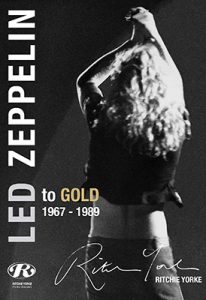
LED ZEPPELIN

THE DEFINITIVE BIOGRAPHY

Printed & Ebook Available here

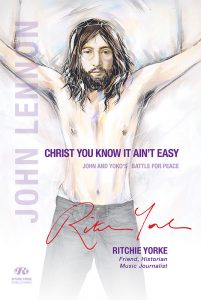
CHRIST YOU KNOW IT AIN’T EASY

JOHN AND YOKO’S BATTLE FOR PEACE

Printed & Ebook Available here

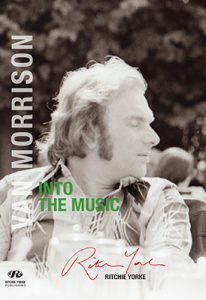
VAN MORRISON

INTO THE MUSIC

Printed & Ebook Available here

Van Morrison was famously reclusive, preferring to stay away from media attention and regularly declining interviews, discouraging many members of the media. Ritchie was a huge fan of Morrison’s music and continued to push for a meeting.

WHOAFWRUS 200 sm

Ritchie befriended Van in 1974 and was one of the few media personalities to be granted interviews with the star. Beyond their professional relationship, Morrison also became a friend, even inviting Ritchie to visit his home for a game of tennis. Ritchie was able to utilise this relationship,  as well as his honesty and trustworthiness to have Van reveal more than ever before, and with this information and Van’s blessing, was able to create this biography.

Van and ritchie

This relationship also led Ritchie to become Van’s publicist for a short time during the promotion of Ritchie’s biography.

WHOAFWRUS 85sm

Ritchie’s friendship with Van Morrison lasted throughout the years, with the pair reconnecting many times over the years, including memorable shows at Massey Hall with mutual friend Ronnie Hawkins and his performance of Astral Weeks in Los Angeles. In fact, the last interview that Ritchie conducted was in October of 2016 with Van, who opened up to his friend a final time.

WHOAFWRUS 100 sm

VAN MORRISON

INTO THE MUSIC

Printed & Ebook Available here

CHRIST YOU KNOW IT AIN’T EASY

JOHN AND YOKO’S BATTLE FOR PEACE

Printed & Ebook Available here

LED ZEPPELIN

THE DEFINITIVE BIOGRAPHY

Printed & Ebook Available here

Ritchie Yorke’s Liner Notes for
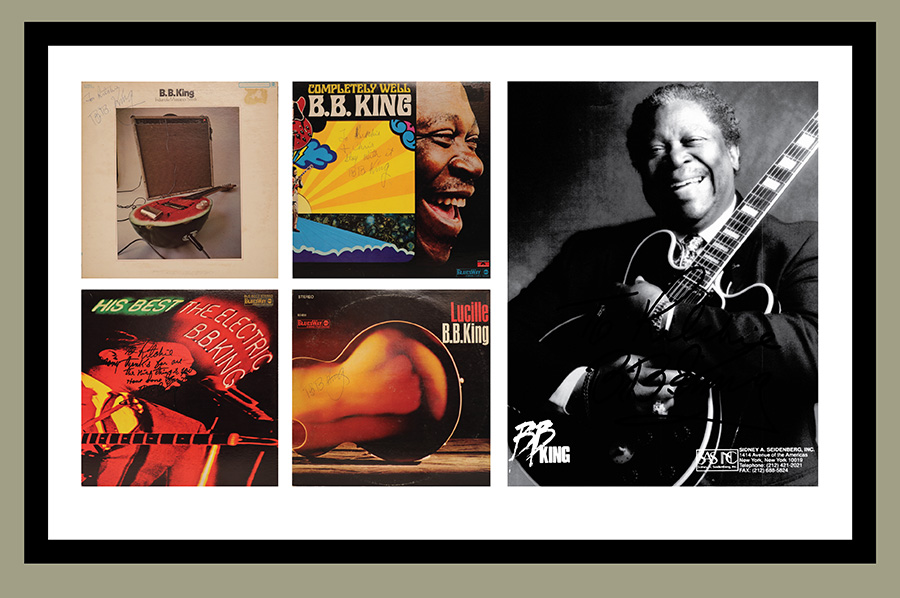
HIS BEST-THE ELECTRIC B.B. KING 

Not long ago, at that now famous farewell Cream concert in New York’s massive Madison Square Gardens, I suddenly realized the unfairness of the great American dream. As I sat there, amidst the screams of more than 21,000 ecstatic fans, I thought of the tens of thousands of dollars Cream was earning its ninety minutes of on stage effort. 

My thoughts also wandered off across the country to other pop concerts where various young contemporary guitarists such as Jeff Beck, Jimi Hendrix, Mike Bloomfield, Alvin Bishop and dozens more, were likewise collecting many thousands of dollars doing this blues guitar thing. 

I thought of B.B. King, the man who’d made it possible for Clapton, Hendrix, Beck and Company to earn those vast amounts. All too well, I realized that Cream would earn in that one night at the Gardens, a great deal more than B.B. could hope to put together in the whole of 1968. I had mental images of the little beat up clubs in the deep South where washrooms double as dressing rooms, and where you consider yourself lucky to collect half the promised fee for a night’s work. 

When Cream finished Spoonful, and walked off into the bowels of the stadium without even a glance backwards, I went for a walk along 8th Ave., past the pokey little lobbies, and the pile of garbage and yesterday’s newspapers

I thought of the bitter young undiscovered guitarists I’d spoken with in the past few months — bitter because they’d been playing that damn axe for two long years and the world still hadn’t turned on to what they were putting down. The inevitable complaints about slow room service, airlines with ugly hostesses, Cadillacs with overflowing ashtrays. 

And again I thought of B.B. King and an interview I’d done with him in Atlanta a few weeks previously. 

I’d expected him to be bitter and none too keen to talk to a white reporter about the problems of being black; from the roots; a man out of the baked brown earth of the Mississippi Delta. 

But he wasn’t bitter or even despondent. B.B. King long ago learned how to face facts. He realized that many people have hitched themselves to his bandwagon, and he doesn’t hold it against them. Indeed, he’s rather proud that Eric Clapton and company, were so impressed with his style that they saw fit to copy it.

Twenty years ago, while fiddling around with his guitar, B.B. had discovered a strange sound resulted from squeezing the neck of his axe. He developed that sound into a unique technique, one which became his trademark. Modern musicians use a fuzz box to achieve a similar effect. 

DJKEWOPLK 12JAN69 copy

In the 20 years since, B.B. has wearily tramped the South, playing for people who dig real blues but regrettably, have very little money to pay for it. In those two decades, he’s had just two months off, and he’s been involved in 14 car accidents where the vehicle was a complete write off. 

Up until recently, B.B. hadn’t a hope of making the big bread scene, or of appearing at the places where his disciples pick up the big dollar. But that’s changing. With each day’s passing, B.B. edges a little closer to super stardom. The question is not if but when he’ll get there. 

Getting back to the roots is currently fashionable. Young aficionados of pop music are now involved in a quest to follow the lifeline of contemporary rock back to its source. Hundreds of thousands of them keep bumping into the name of B.B. King. The jigsaw puzzle is fitting together for B.B. 

The New York Times and Eye Magazine have done big pieces on him. FM underground stations are playing the hell out of his old ABC albums. He played two songs in the soundtrack of the recent Sidney Poitier movie, For Love of Ivy, both of which are included herein. 

His bookings for early 1969 are already better than any year that has gone before. He’s set to play at New York’s Fillmore East and Village Gate, the Boston Tea Party, Kent University and numerous other prime spots. 

In addition, B.B.’s record label of several years,  ABC Records, has set aside a B.B. King month in his honour. This latest album, His Best — The Electric B.B. King, highlights all those years of waiting. 

It is I am convinced, the breakthrough album for B.B. Always one of the biggest sellers in the heavy blues market, B.B. King is all set to carve a huge path through the pop field. 

The songs on this album typify a stormy, often unhappy but seldom dull life. The lyrics are simple, yet rich and deep. His gutsy singing is punctuated by tinkling piano, exploding shouts from the horns, a thudding bass, and heavy rhythmic drum beats. 

 But it’s the twisting mournful sounds which come from Lucille’s amplifier which demonstrate why B.B. is rightfully regarded as the greatest living blues guitar man. His skill on axe defies description; it transcends technique and descends into an abstract feeling. His imitators can and do imitate his every note, but something is still missing.

B.B. King music has no form or pattern. He’s likely to tap his foot for the first six beats of a break, before letting loose with one glorious shriek. The notes seem to jump in the air like lightning, before plunging down into your innermost soul.

 Perhaps I’m naive in believing that credit should go where credit’s due, but I’m convinced that this unassuming 43-year-old blues man is tottering on the brink of super stardom. I believe his discovery will come from this album. And B.B. will no longer merely be the most significant influence on pop music of the late Sixties, but also one of its major exponents. Long ago, B.B. paid the cost to be the boss.

RITCHIE YORKE
The Globe and Mail, Toronto
Rolling Stone. U.S.A. New Musical Express. U.K.

IMG_0974 copy

CHRIST YOU KNOW IT AIN’T EASY

JOHN AND YOKO’S BATTLE FOR PEACE

Printed & Ebook Available here

LED ZEPPELIN

THE DEFINITIVE BIOGRAPHY

Printed & Ebook Available here

VAN MORRISON

INTO THE MUSIC

Printed & Ebook Available here

Aretha Franklin – A Charming, Soft-spoken, Ambitious, Self-confident Artist

Aretha interview shot

Despite the fact that she is the biggest name in the music world, Aretha Franklin is a voice without an image. She is just a remarkable sound on a record. The public knows little about Aretha. She rarely grants press interviews. She employs no publicists and press agents. She lives in a world that has never been penetrated by the press.

But now for the first time, a Canadian journalist has secured an interview with Aretha Franklin, and found out how the Franklin phenonemon came about.

atlantic test pressing

In one of the pleasant middle-class homes which line the long streets of north west Detroit, passers-by often notice an attractive young woman dusting and re-arranging ob- jets d’ art in the living room.

If any of the pedestrians ever stopped to tie up a shoelace, they would catch the familiar sound of daytime TV soap operas. The situation is typical. The woman is not.

Her name is Aretha Franklin. She’s the biggest phenomenon to stun the music industry since the paralyzing debut of the Beatles. In the past 12 months, she has sold more records and made more money than any member of the recording fraternity.

A year ago, Aretha lived in another house — close to the city’s ghetto area — and another world. In those days, she dusted, watched soap operas, and dreamed of the day when things would change. It came.

Ritchie Yorke 1968

elenor rigby with horns

The only pressing and perhaps the only recording in the world of Aretha Franklin’s Eleanor Rigby with Horns.

CHRIST YOU KNOW IT AIN’T EASY

JOHN AND YOKO’S BATTLE FOR PEACE

Printed & Ebook Available here

LED ZEPPELIN

THE DEFINITIVE BIOGRAPHY

Printed & Ebook Available here

VAN MORRISON

INTO THE MUSIC

Printed & Ebook Available here

Steve’s vision may light up a dark world

Wonder’s world transcends the riches of rock superstardom. His life is not confined to the gifts that the big time can bring. Clearly the 37-year-old musical genius has a deeper commitment to the joys of life in the late 20th century. He cares passionately about the present predicament of the planet, its benefits and its bewilderment with an avalanche of apparent problems.

Minnie richie steve

In short, Stevie Wonder is a welcome breath of fresh air in the current sea of rock music apathy. He’s a sensitive man who sees — despite his blindness — beyond the compulsion to reach the number one position on the American best-selling record charts.

Ritchie Yorke 1987

Stevie Wonder Ticket

CHRIST YOU KNOW IT AIN’T EASY

JOHN AND YOKO’S BATTLE FOR PEACE

Printed & Ebook Available here

LED ZEPPELIN

THE DEFINITIVE BIOGRAPHY

Printed & Ebook Available here

VAN MORRISON

INTO THE MUSIC

Printed & Ebook Available here

“Six months down the track from the Montreal Bed-In and an historic live appearance as part of the North American debut of the Plastic Ono Band at the Toronto Rock’n’ Roll Revival in September (the cause of the break-up of The Beatles), the Lennons had returned to Canada’s French province. This time we had traveled on a specially chartered railway observation car attached to the rear of the daily Montreal Rapido train service. Peace Festival promoter John Brower recalls that it cost around $2000 to charter the separate carriage. It was money well spent – and more than worth that outlay to be in a position to guarantee John and Yoko’s security and privacy. And to provide transportation for our eager little band of peace propaganda promoters which comprised John and Yoko, Fawcett, Ronnie and Wanda Hawkins, Brower, my then wife Annette Yorke (now Carter) and myself. The sight of the private observation car, redolent of the grand old days of rail travel, was also bound to impress the legion of media types who turned out to bid us farewell from Toronto.”

traintomontrealsm

“As we shuffled our luggage and famous charges into the observation car, little did any of the eager-beaver press corps pressing upon the platform at Union Station know about the motives for this out-of-town excursion. They had simply concluded that we were headed for Montreal to further spread the word – and to alert Quebec media to the expanding Peace Festival plans. They had no idea of a private meeting involving federal government officials that was scheduled to take place deep in the bowels of Bonaventure Station, Montreal, that evening.”

Excerpt From: Ritchie Yorke. “CHRIST YOU KNOW IT AIN’T EASY.”

23th December 1969
At 10:30am, the press was stunned by the news of the impending meeting between Pierre Trudeau and John and Yoko. At precisely 10:55am, John and Yoko were rushed by limousine to Parliament building. About 50 members of the press (which the PM’s secretary described as “definitely more than usual”) were awaiting the Lennons’ arrival outside the most important office in the country.

D. 362 low res

CHRIST YOU KNOW IT AIN’T EASY

JOHN AND YOKO’S BATTLE FOR PEACE

Printed & Ebook Available here

LED ZEPPELIN

THE DEFINITIVE BIOGRAPHY

Printed & Ebook Available here

VAN MORRISON

INTO THE MUSIC

Printed & Ebook Available here

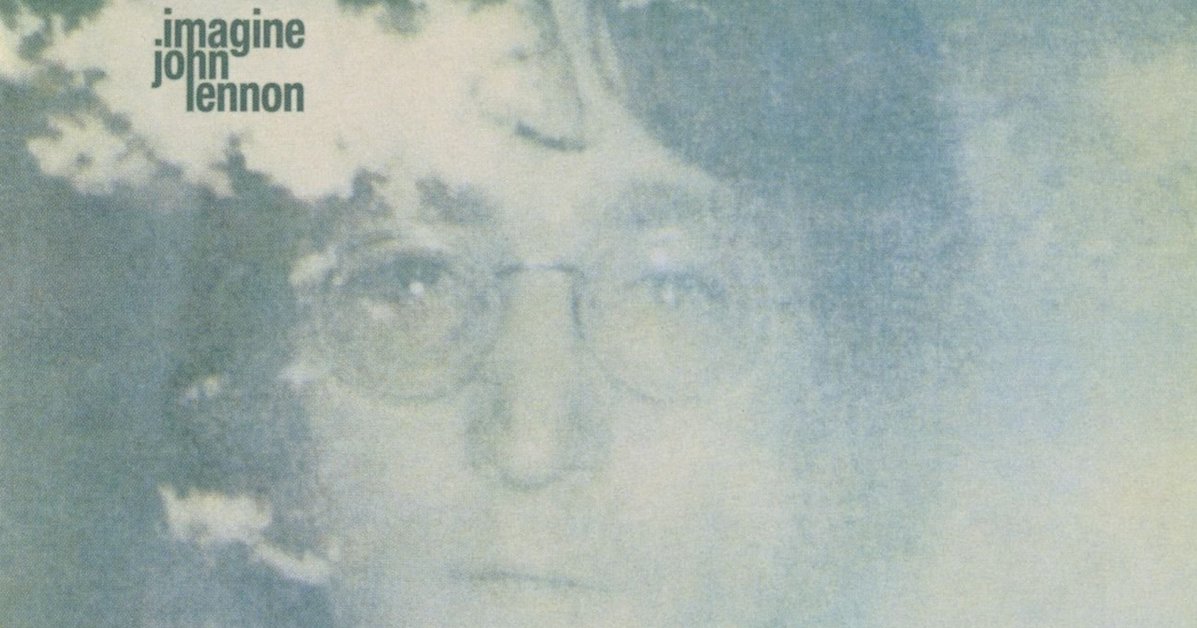
On this day in 1971, John Lennon and Yoko Ono spent their second day filming the “Imagine” promotional film

After the massive success of the album and song, Lennon was inspired to create an accompanying documentary film. 

The film originally ran for 70 minutes, but was trimmed to 55 minutes to fit on a VHS tape. The full 70 minute cut was eventually released on DVD and Blu-ray in 2002. “Imagine” featured mostly promo style material for the selected songs, interspersed with clips of Lennon and Ono’s life together, as well as some fantasy and gag sequences. In one of these clips, a succession of men (ranging from assistants to celebrities including Fred Astaire and George Harrison) lead Ono through a doorway repeatedly. Other celebrities like Andy Warhol and Dick Cavett also appeared in the film.

“Imagine” was shown at multiple film festivals and even won the “Silver Lion” award for Best Clip at Cannes and the Festival Award at the Rio International Film Festival. The film performed well and was well-liked by critics for the most part, though some called it “the longest home movie ever made”. The movie was later re-released in theatres in 2018.

CHRIST YOU KNOW IT AIN’T EASY
JOHN AND YOKO’S BATTLE FOR PEACE

Printed & Ebook Available here

On this day in 1968, The Beatles moved into their new headquarters in London

After purchasing the Georgian townhouse at 3 Savile Row, London for £500,000 on the 22nd of June, the group quickly renovated and readied themselves to move in. Apple Corps had previously been based at 94 Baker Street and 95 Wigmore Street, though this would be the first time they had a whole building to themselves.

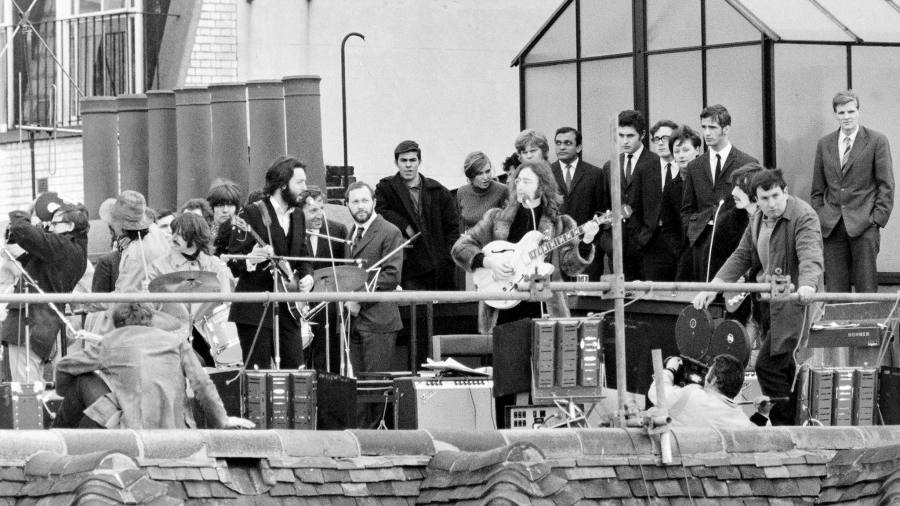
The building featured an office for each of The Beatles and a recording studio in the basement. Most of the Let It Be album was recorded in this studio, and the famed rooftop performance that would be their last as a band was held on the buildings roof. Beatles fans used to congregate outside and were immortalised in a George Harrison song called “Apple Scruffs”. John Lennon and Yoko Ono also ran their early peace campaigns from the building under the name of Bag Productions.

The Beatles stayed at 3 Savile Row for around 18 months in the lead-up to the rooftop concert. The building was later closed for a time before it was purchased by British clothing company Abercrombie and Fitch who used the building first for a children’s line before transforming it to a regular store. Many Beatles fans visit the building even today, and it is a common stop on Beatles tours around London.

CHRIST YOU KNOW IT AIN’T EASY
JOHN AND YOKO’S BATTLE FOR PEACE

Printed & Ebook Available here

On this day in 1958, the Recording Industry Association of America gave out the first certified gold record for an album to the soundtrack of “Oklahoma!”

Released in 1955, the film is an adaptation of a Broadway musical of the same name. The story follows a farm girl and her courtship by two rival suitors, a cowboy and a farmhand. The film received rave reviews and was voted a “New York Times Critics Pick”.

The soundtrack was originally released as a 42-minute album on Capitol Records, but only in mono. However, as other 1956 films such as “Carousel” began to release state of the art stereo soundtracks, the decision was made to reissue the album in stereo. Due to the differences in mono and stereo grooves on the disk itself, it became necessary to cut a brief section of the music for its stereo release.

The album went to number one on the Billboard Pop Album Chart in 1956 and also reached the top of the UK albums chart. The certified gold record at the time indicated that the album had made one million dollars in sales, the requirement of 500,000 units sold was not added until 1975.

CHRIST YOU KNOW IT AIN’T EASY
JOHN AND YOKO’S BATTLE FOR PEACE

Printed & Ebook Available here

On this day in 1964, The Beatles played the first of two shows in Auckland, New Zealand

After arriving in Wellington on the 21st, the band played four concerts across two days before heading for Auckland for the next four. The band played two shows a night, one at 6:30pm and one at 8:30pm.

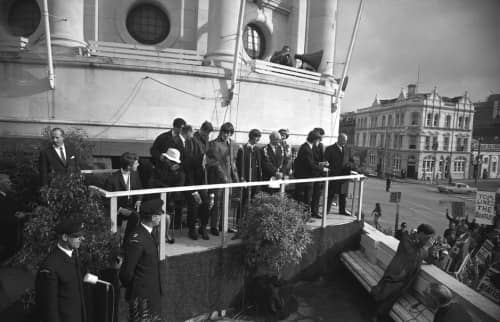
The band was welcomed officially by the mayor, but the Auckland police were much less impressed. In 1981, a tour manager recalled the inspector in charge having the opening remark of “We didn’t want ‘em here and I don’t know why you brought ‘em.” This attitude caused a plethora of security issues throughout the tour. In Auckland, only three officers were assigned to protect the hotel entrance from a mob of several thousand fans. The Beatles were trampled underfoot as they tried to enter the hotel. 

John Lennon was so outraged by the lack of security that he reportedly considered cancelling the shows. A tour manager claimed it was the one time he saw Lennon lose his temper, and that Ringo Starr was equally unimpressed. Both members were slightly injured and Lennon lost a clump of hair after being trampled by the crowds.

Despite these issues, the concerts went ahead as planned and were hugely successful, drawing a huge crowd of adoring fans. However more trouble arose as the band attempted to leave Auckland as a threat of a ‘germ bomb’ on the plane meant that police quarantined all stage equipment overnight and everyones suitcase was checked, delaying the flight by half an hour. Despite the turbulent issues that plagued the tour, the concerts are recalled fondly by the band and by New Zealanders. 

CHRIST YOU KNOW IT AIN’T EASY
JOHN AND YOKO’S BATTLE FOR PEACE

Printed & Ebook Available here